
November 12, 2026
The Best Sites to Hire Angular Developers: Six Options, and the One Question That Picks Between Them
The best sites to hire Angular developers depend on which of the three Angular jobs you have. Six channels compared on rate, vetting depth and days to a first merged commit.
November 10, 2026
How to Find the Best Salesforce Nonprofit Partners Without Burning a Grant
Five weighted criteria, four kinds of partner with US rate bands, a one-page scope every bidder gets, and the eight questions that expose a deck with no delivery behind it.
November 9, 2026
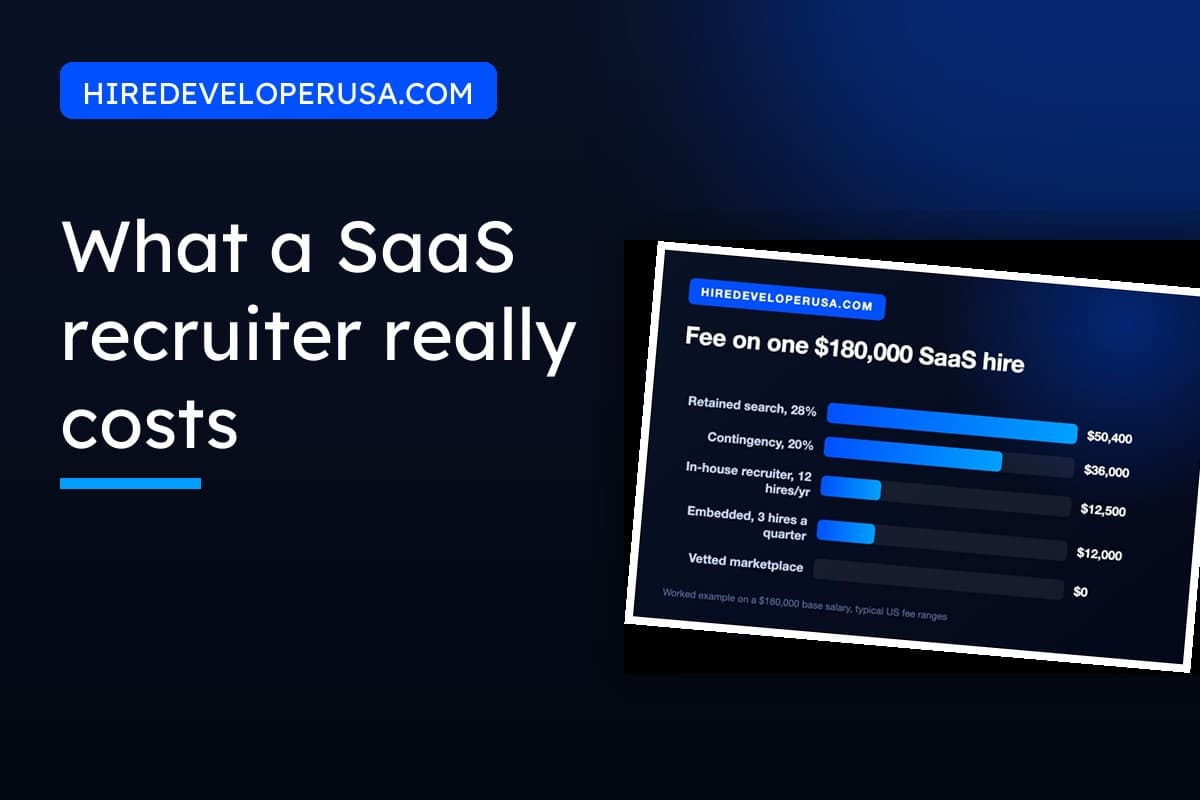
SaaS Recruiters and Agencies: We Priced Five Models on One $180,000 Hire
Five ways to buy SaaS hiring, priced on the same $180,000 engineer: from $50,400 down to no placement fee at all. Plus the eight questions we score firms on.

November 8, 2026
Where Is the Best Place to Hire PHP Developers? Six Channels, Ranked by Rate, Risk and Time to Start
The best place to hire PHP developers depends on your deadline. Six channels compared on rate, vetting depth and days to first commit, plus the code signals that separate senior from senior-looking.
November 7, 2026
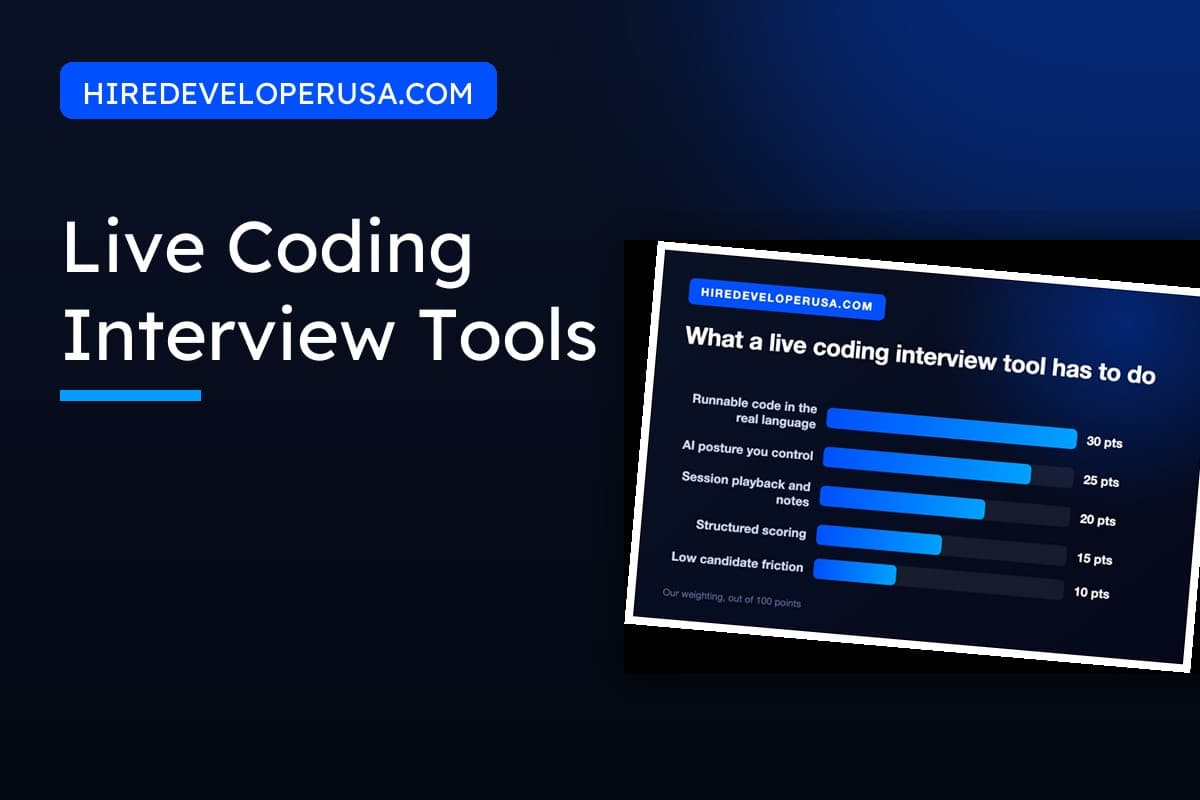
Best Live Coding Interview Tools: What Actually Tells You If Someone Can Code
Most teams buy a live coding interview tool for the question bank, then interview badly inside it. Here is the five-point gate, the category comparison and the 60-minute run of show.
November 6, 2026
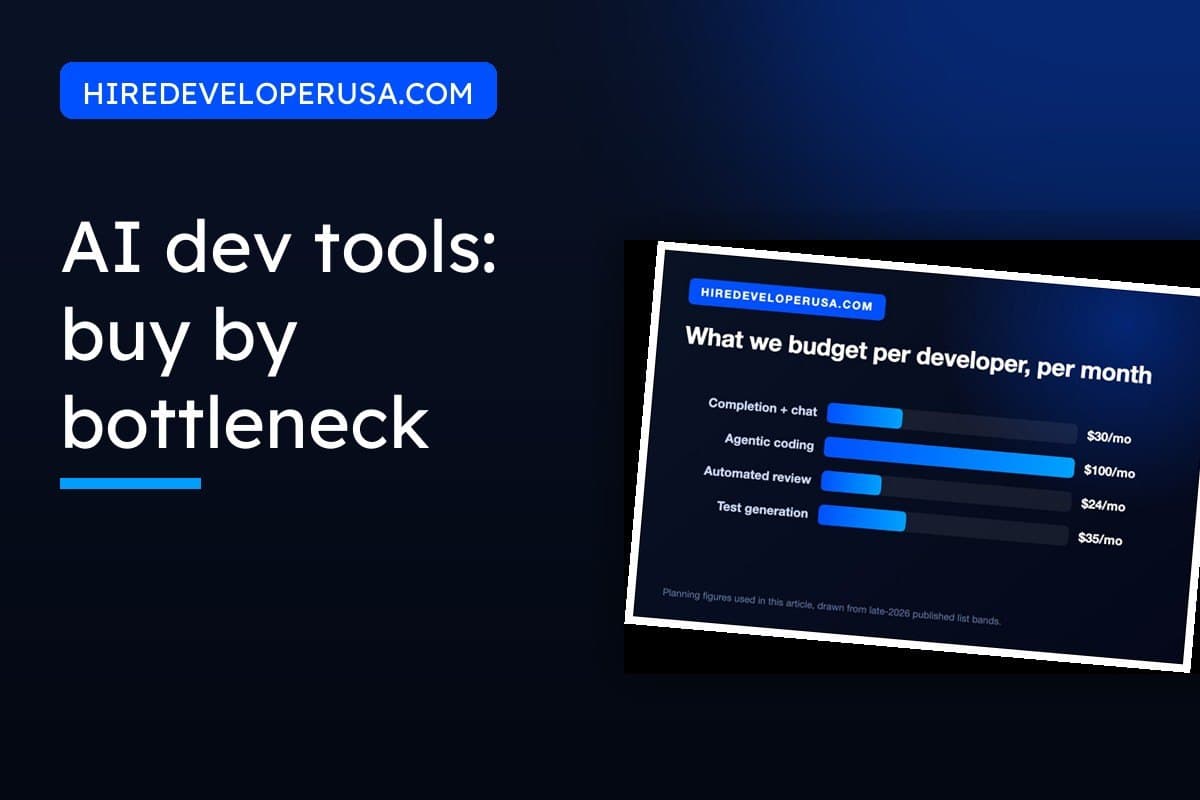
Stop Buying AI Software Development Tools by Category. Buy Them by Bottleneck
Most AI tooling budgets attack the fastest part of the job. Here is how to buy against the stage where delivery actually stalls, with per-seat bands and a 30-day trial.
November 5, 2026
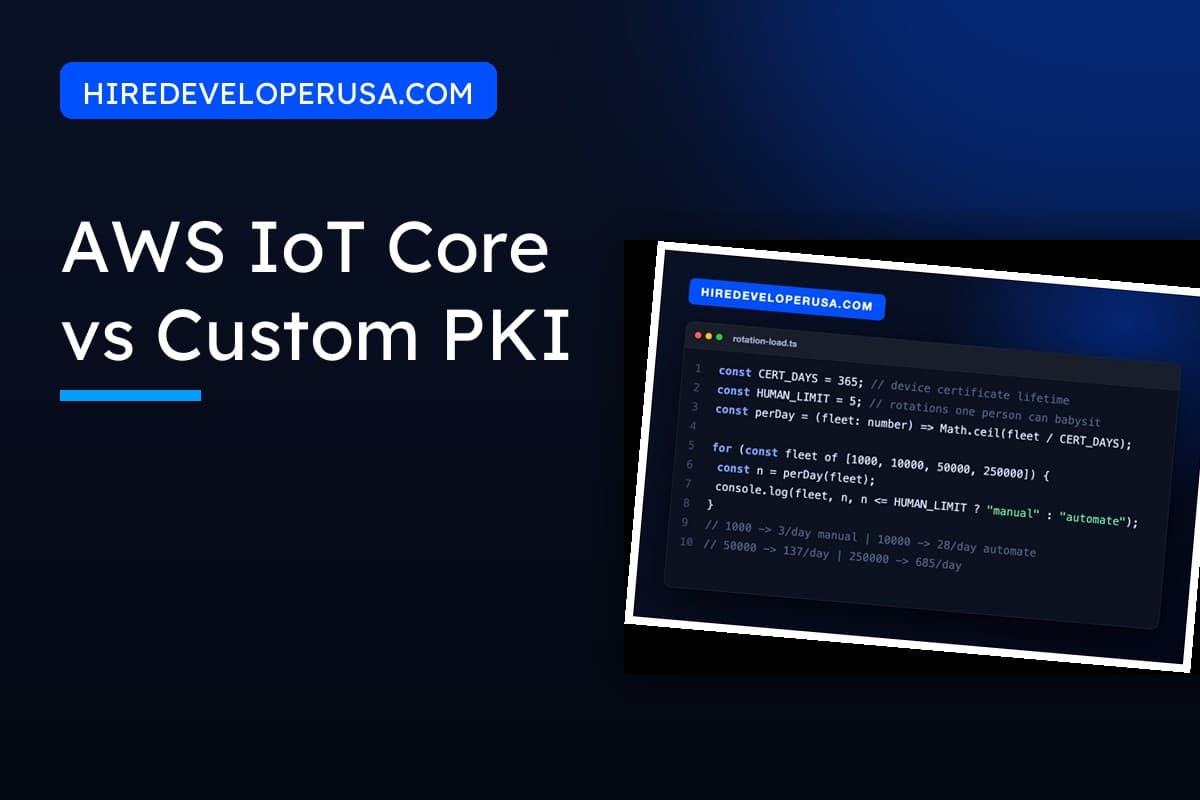
AWS IoT Core vs Custom PKI: The Security Decision You Cannot Cheaply Undo
Use AWS IoT Core's managed certificates when you ship fast on AWS. Own the CA when hardware outlives the contract, a regulator asks who holds the key, or a second broker is coming.
November 3, 2026
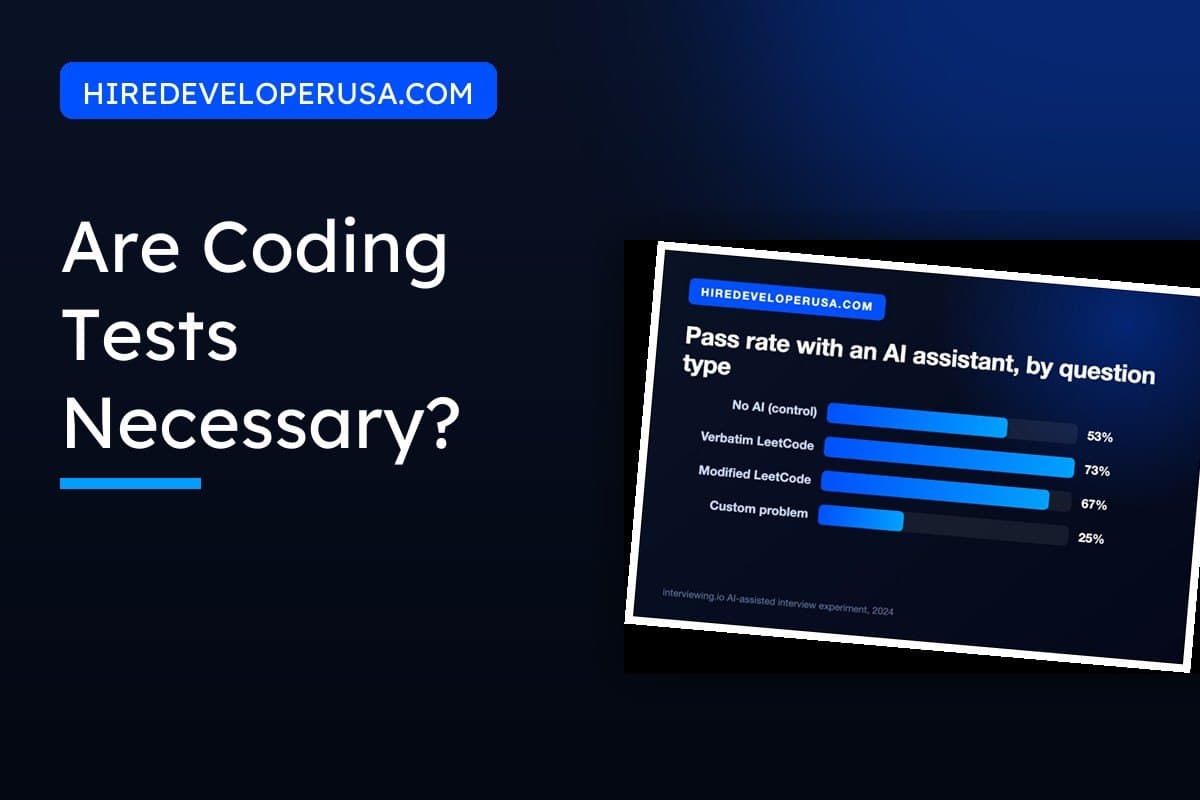
Are Coding Tests Necessary? Three Formats Still Work, Two Waste Everyone's Time
Coding tests still work, but only one kind. Here is what the formats predict now, what a round really costs, and the 90-minute screen an AI cannot game.

November 2, 2026
Power BI Pricing Explained: What It Really Costs a US Team in 2026
Power BI Pro is $14 per user per month and Fabric F64 runs about $8,410. Here is what each tier buys, and the cost that never appears on the price list.
November 1, 2026
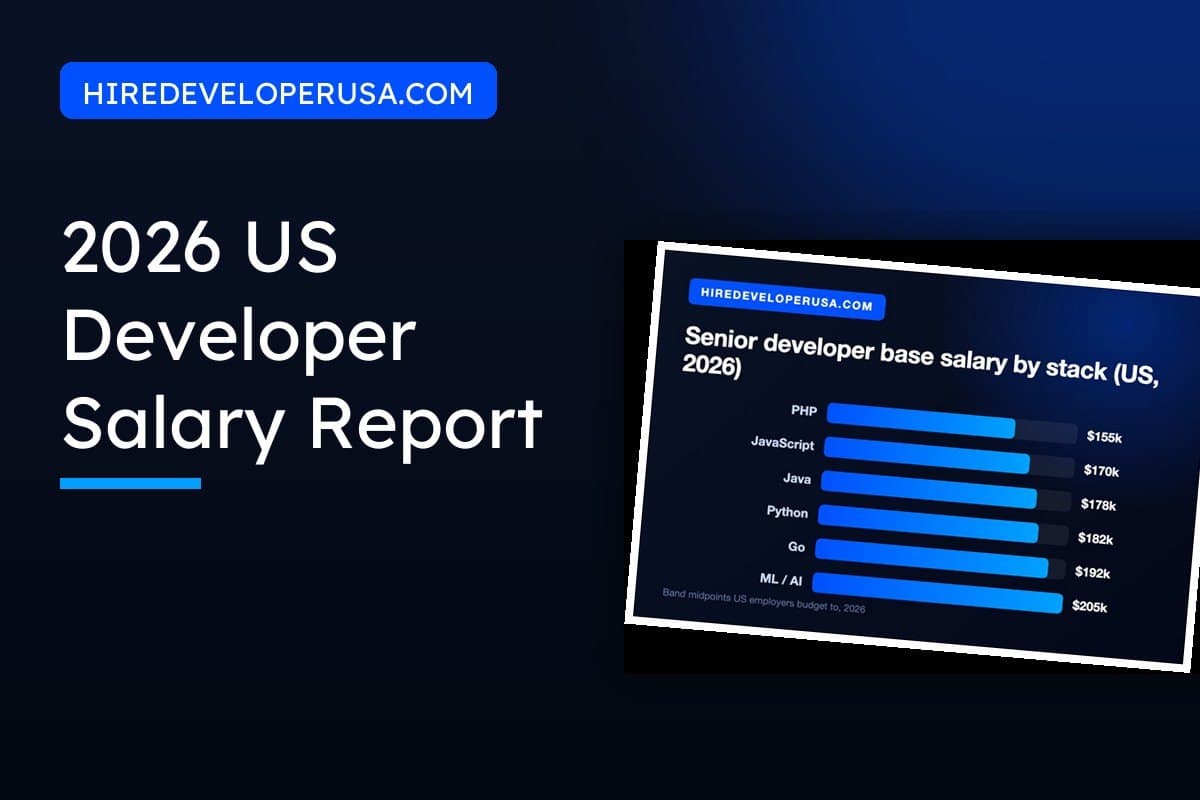
The 2026 US Developer Salary Report: Every Band, and the 1.25x Multiplier Nobody Budgets For
US developer base salaries run $80k to $250k in 2026, and the hire costs about 1.25x base once payroll, benefits and equipment land. The bands, by level, stack and metro.
October 30, 2026
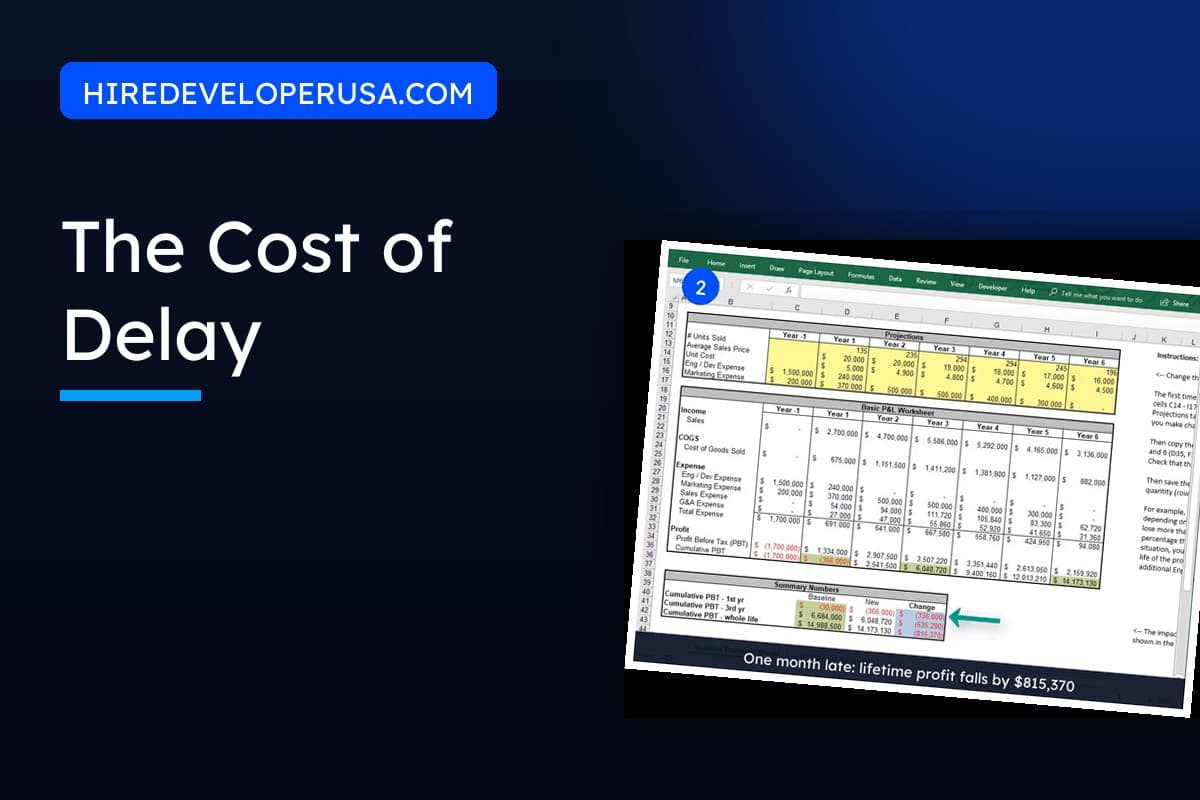
The Cost of Delay: Why an Open Developer Role Costs More Than the Salary You Are Saving
Cost of delay is the profit you lose for every month a project ships late. It is usually far larger than the team building it, and you can calculate yours in an afternoon.
October 28, 2026
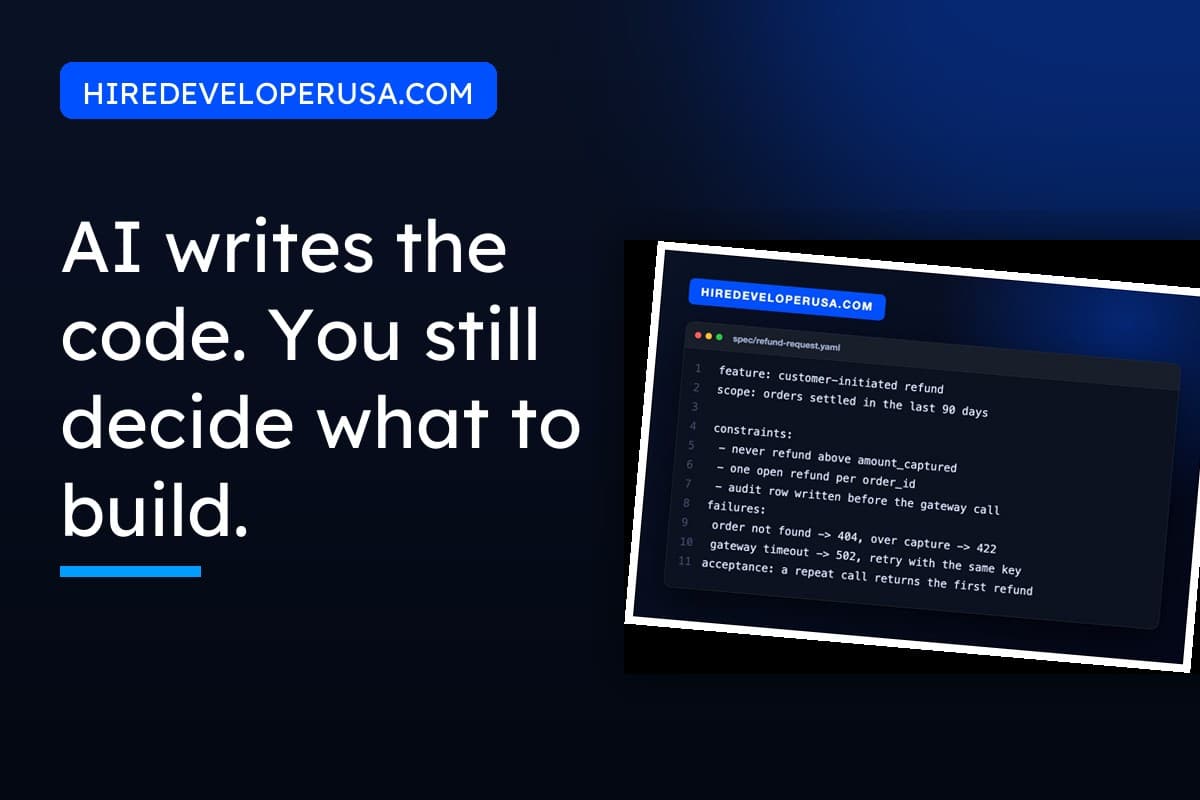
AI Writes the Code Now. Here Is What You Actually Hire For
The model produces the code. It cannot decide which code is worth producing. Here is what that moves in your hiring, with a worked cost gap of $1,560 on a single feature.
October 27, 2026
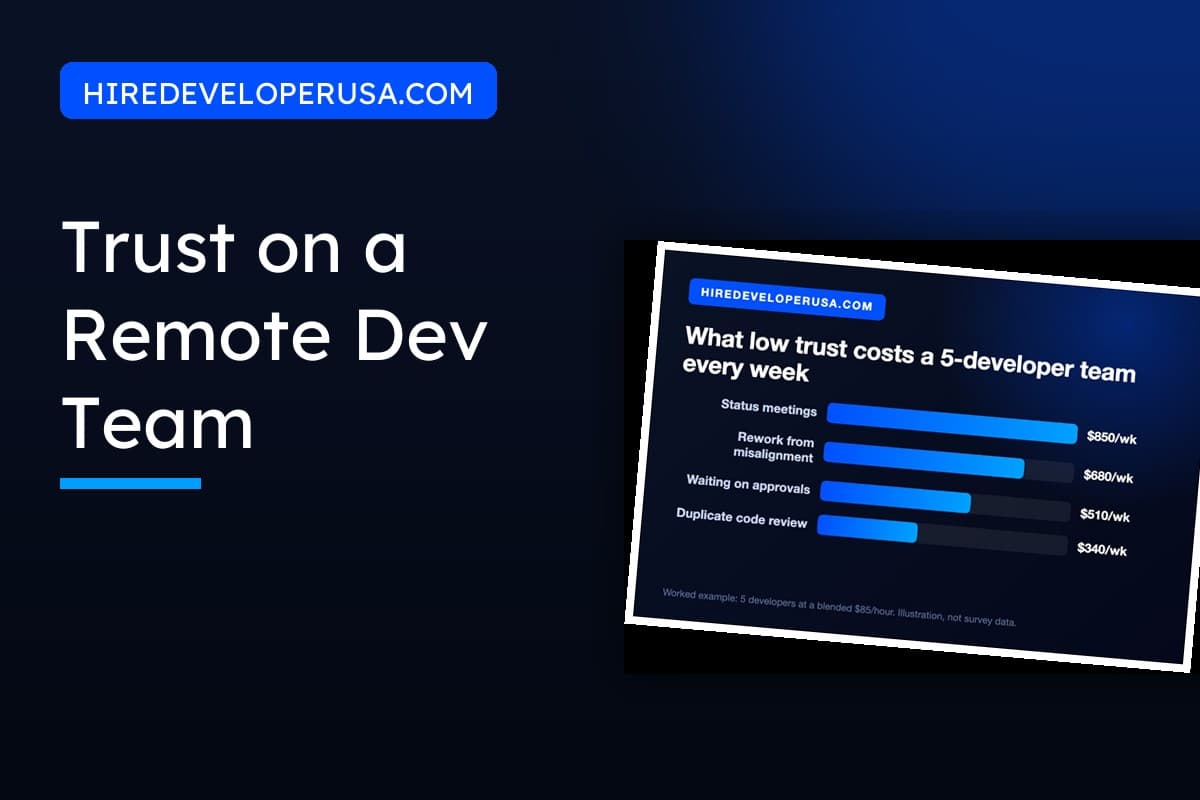
The Fastest Way to Build Trust on a Remote Developer Team
Extend trust before it is earned, then make it cheap to prove you right. The six swift trust conditions, a 30-day sequence, and what low trust costs a team of five.
October 26, 2026
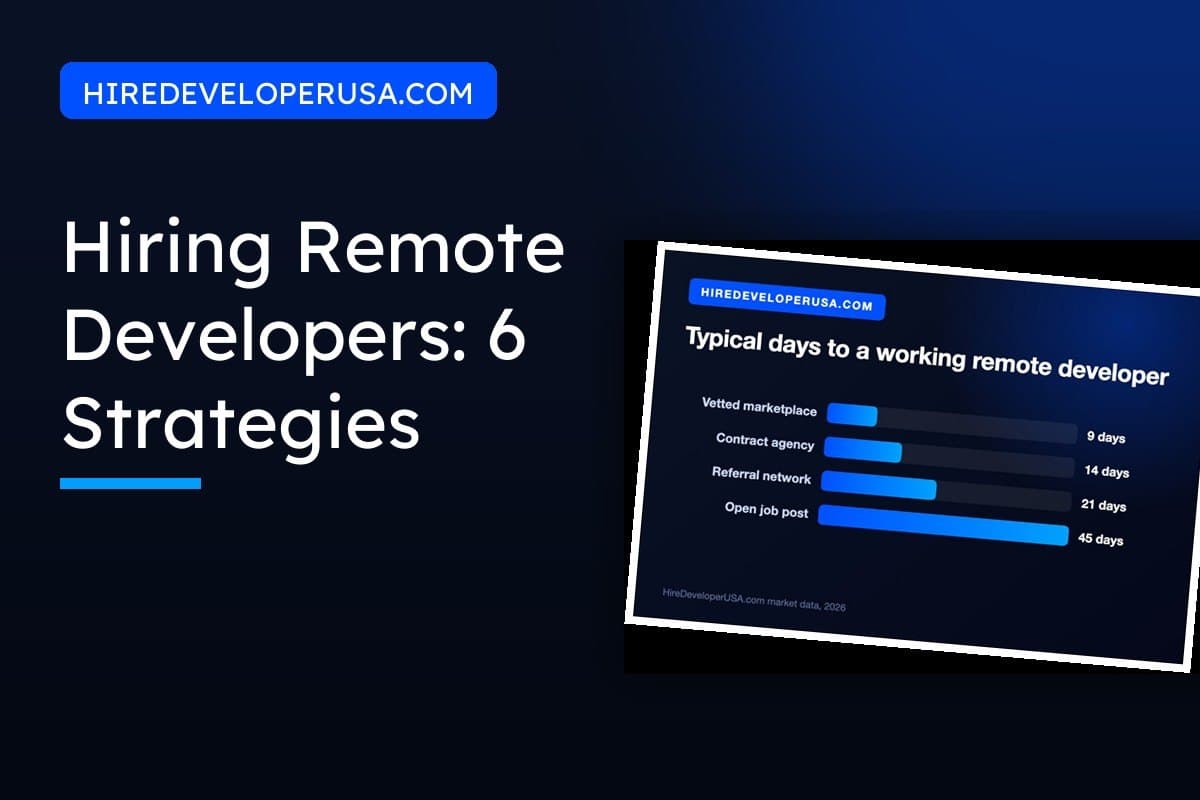
Hiring Remote Developers: The Six Strategies That Work, and the Three That Waste a Quarter
Six strategies for hiring remote developers: buy a scope not a seat, match the channel to your deadline, pay for overlap hours, and prove the hire in one bounded week.
October 25, 2026
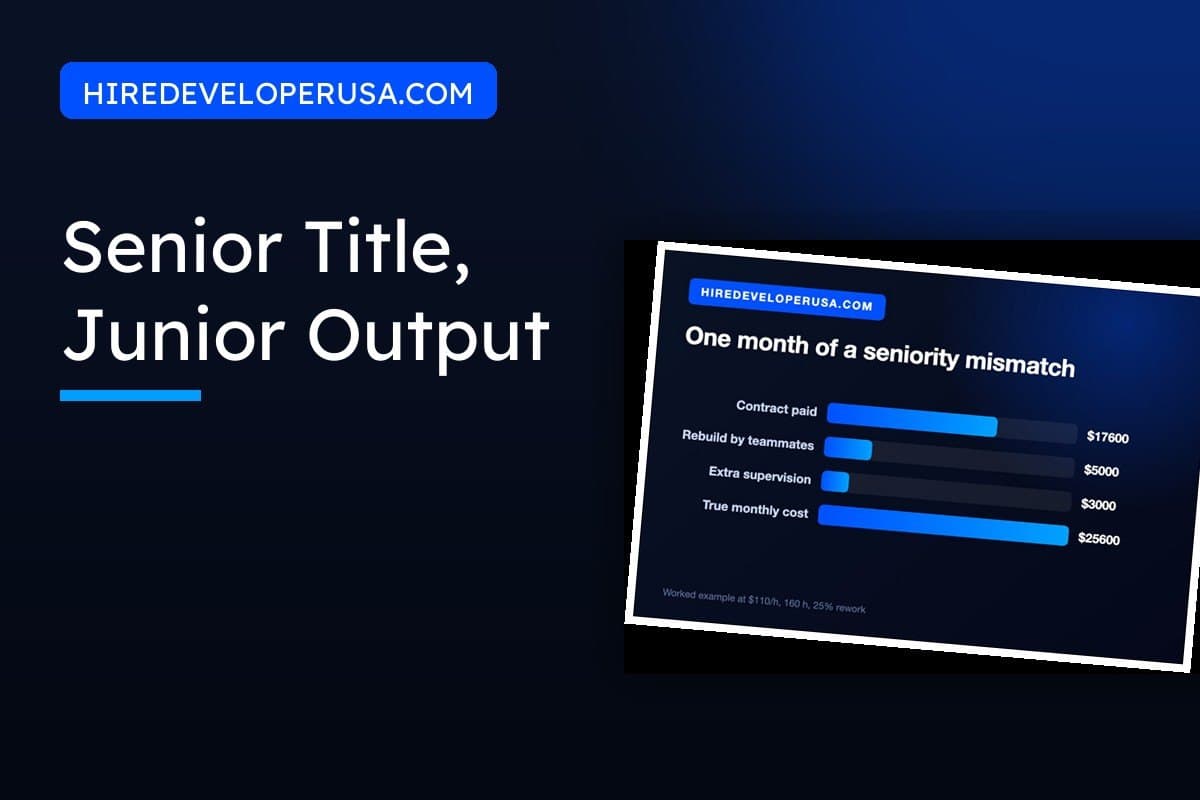
Senior on Paper, Junior in Practice: What the Mismatch Costs and How to Spot It
A developer who reads senior but performs junior does not cost you their rate. It costs you the rework, the supervision and the delay. Here is the arithmetic.
October 21, 2026
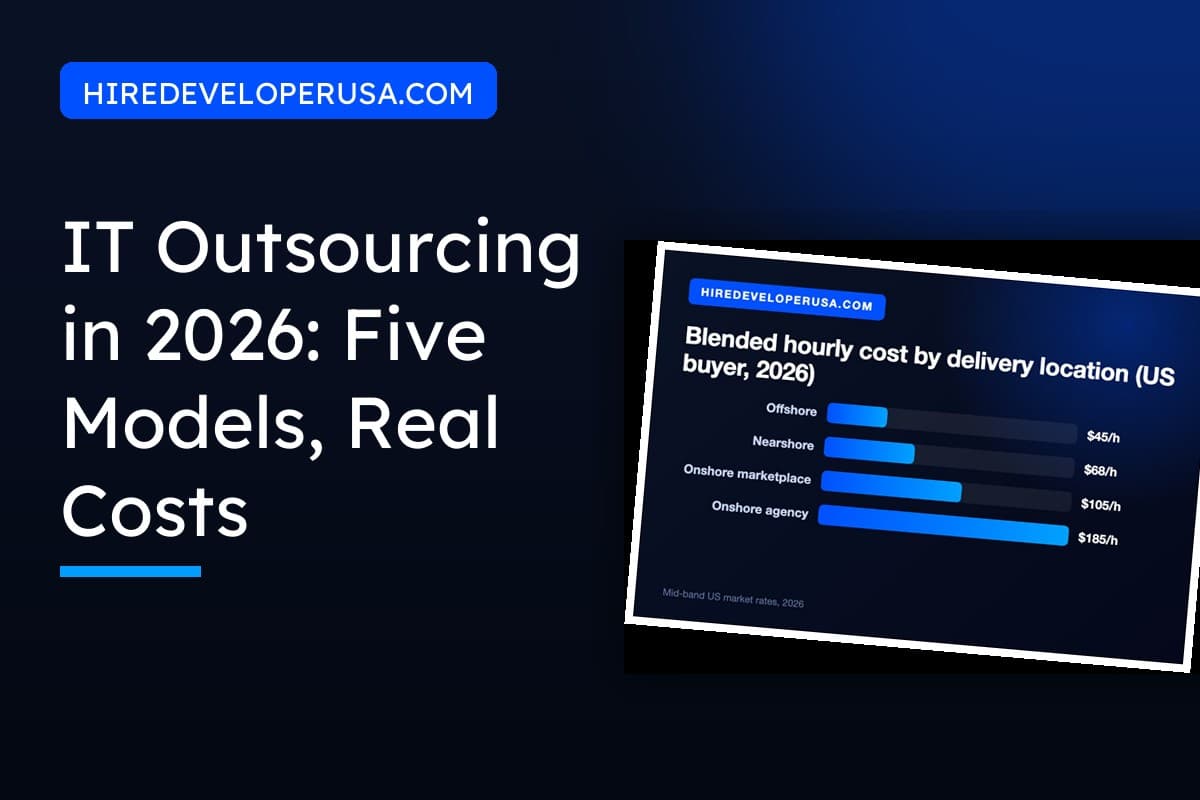
IT Outsourcing in 2026: Five Models, What Each One Costs, and Where Each One Breaks
Staff augmentation, dedicated team, project-based, managed services, build-operate-transfer. What each costs a US buyer in 2026, and the failure mode that makes it expensive.

October 20, 2026
Java Developer Hourly Rates by Country in 2026: Ten Markets, and Where the Savings Quietly Shrink
Mid-level Java costs $65 to $95 an hour in the US and $22 to $38 in India. Ten markets priced, the four line items a rate card hides, and why a 63 percent discount lands at 52.

October 20, 2026
How to Manage a Development Team in Linear in 6 Steps
Linear sorts work into three levels: issues that one person owns, projects that combine into a dated deliverable, and initiatives linked to company goals. In six steps, this guide configures all three for a development team, starting with splitting the workspace into teams and ending with the saved views and written project updates that take the place of the status meeting.

October 19, 2026
Hiring Node.js Programmers in India: What $25 an Hour Really Buys
Node.js rates in India run $15 to $80 an hour. Node sits at the bottom of that band for one reason, and the quote hides three different costs. Here is the pricing math.

October 18, 2026
The Four Filters We Run Before We Call Anyone a Node.js Expert
Four filters, 75 minutes and one paid trial task: how to tell a Node.js expert who has carried production load from a resume that happens to list Express.

October 14, 2026
How We Hire Java Developers: Real US Rates, Five Code Signals and the Paid Ticket That Settles It
Four job shapes behind one title, US rate bands by seniority, sourcing timelines to a first commit, five code signals that filter a Java sample, and the paid ticket that replaces interview four.

October 14, 2026
How to Run a Technical Interview in 6 Steps
A technical interview should show you how a developer works when the answer is not already in their head. This guide turns one small problem into a repeatable session: ban code for the first few minutes, make questions and narration explicit, let the first version stand, ask for the portable primitive, test the output against the spec, then change the requirement and ask about cost.

October 12, 2026
How to Scope an MVP in 6 Steps
An MVP is the smallest thing you can give the first users you have in mind, so you learn whether it helps them at all. This guide covers the six scoping decisions that hold a first build to weeks rather than quarters: who the first users are, what the pre-launch phase is for, how lean the build should be, how your scope stacks up against first versions that worked, what counts as a launch, and how to time box, write and cut the spec.

October 12, 2026
Your Software Vendor Shut Down Overnight: The 30-Day Plan to Get Your Product Back
A vendor collapse rarely kills a product because the code was bad. It kills it because nobody could log in. Here is the 72-hour salvage list and the 30-day recovery plan.
October 11, 2026
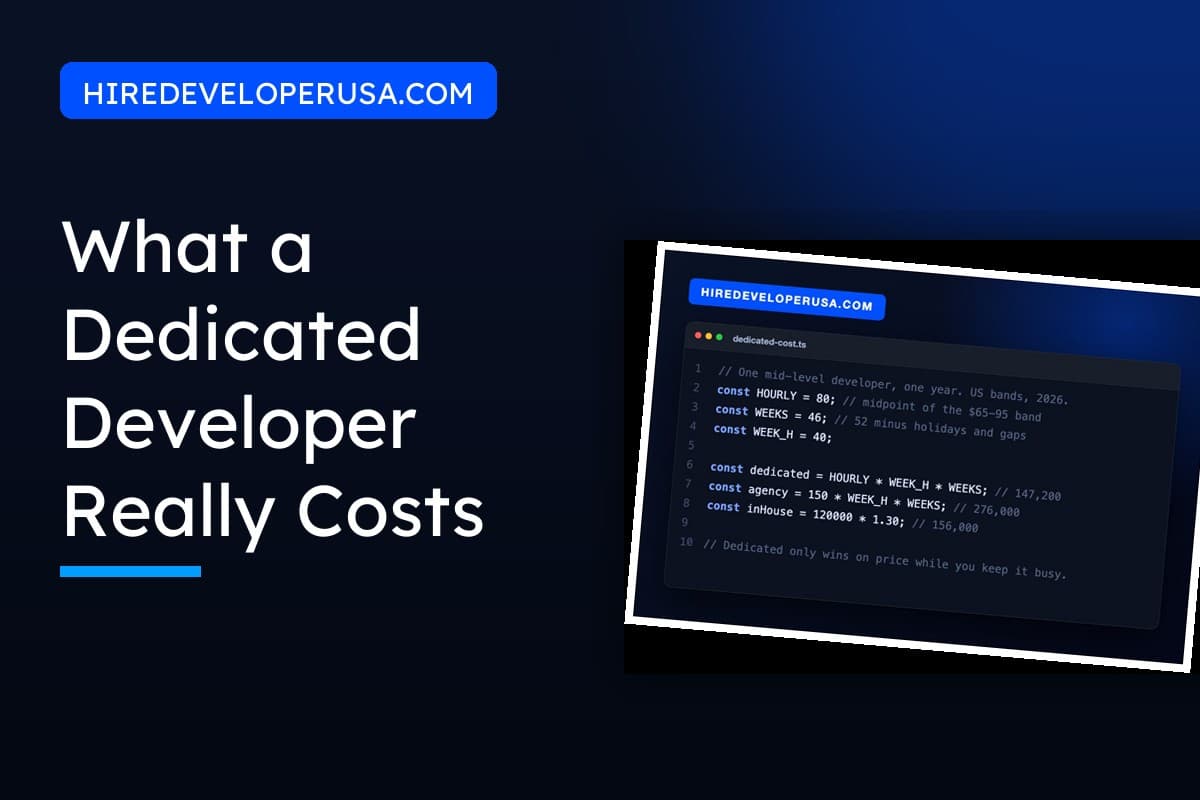
What a Dedicated Developer Really Costs, and the Three Cases Where It Backfires
A dedicated developer costs $45 to $120 an hour in the US, about $147,200 for a year. Here is when the model beats a freelancer, an agency or a full time hire.

October 10, 2026
How to Set Up Monitoring for a Web Application in 6 Steps
Monitoring a web app is a fifteen-minute job, not a platform migration. This guide takes you through six steps, from an empty dashboard to a monitor you trust: naming and typing the monitor, sending alerts to the right inbox, running the first check by hand, validating what an API actually returns, reading a failed check, and setting the defaults once.

October 10, 2026
What Affects Software Development Costs: 5 Variables and a $209,400 Gap
Five variables set a software price: who supplies the hours, how senior they are, what you are building, how long it runs, and what sits outside the build quote.
October 4, 2026
How to Audit a Codebase Before You Acquire a Company, in Six Steps
The demo works. The codebase underneath decides what the next two years cost. A six-step audit a non-technical buyer can run with one independent engineer, ending in a priced findings list.

October 4, 2026
How to Reduce Software Development Costs Without Shipping a Worse Product
Most buyers attack the hourly rate first. The bigger money sits in scope, team shape, build versus buy and rework. Here is the arithmetic that takes a $919,200 plan to $251,100.

October 3, 2026
How to Make More Money as a Freelancer: The Four Levers That Move Your Rate, Not Your Hours
Four levers set a freelance price: overhead, market rate, demand and difficulty. Here is the floor math, the US bands by channel, and five moves worth $1,200 to $3,520 a month.
September 22, 2026
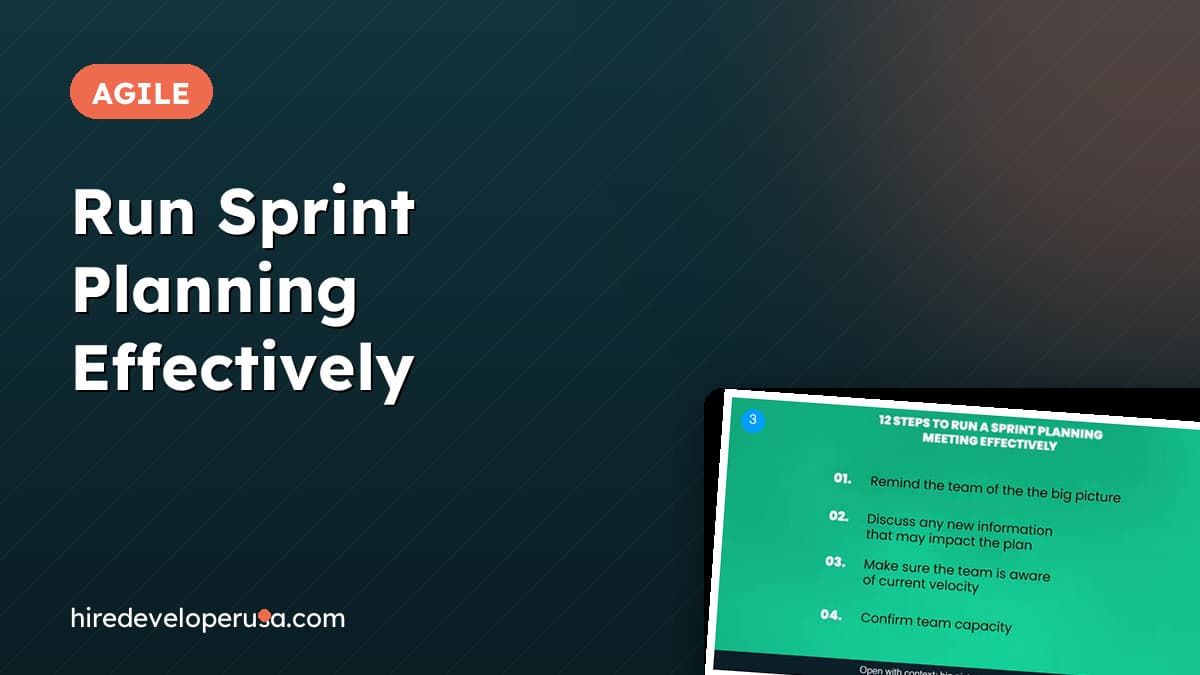
How to Run a Sprint Planning Meeting Effectively in 5 Steps
Sprint planning drags when the backlog arrives unprepared and the meeting has no fixed sequence. This guide covers the four things to finish before the meeting is booked, a rule of thumb for how long to book, the twelve-item order that takes the room from context to commitment, and the approval moment that makes the plan real.
September 20, 2026
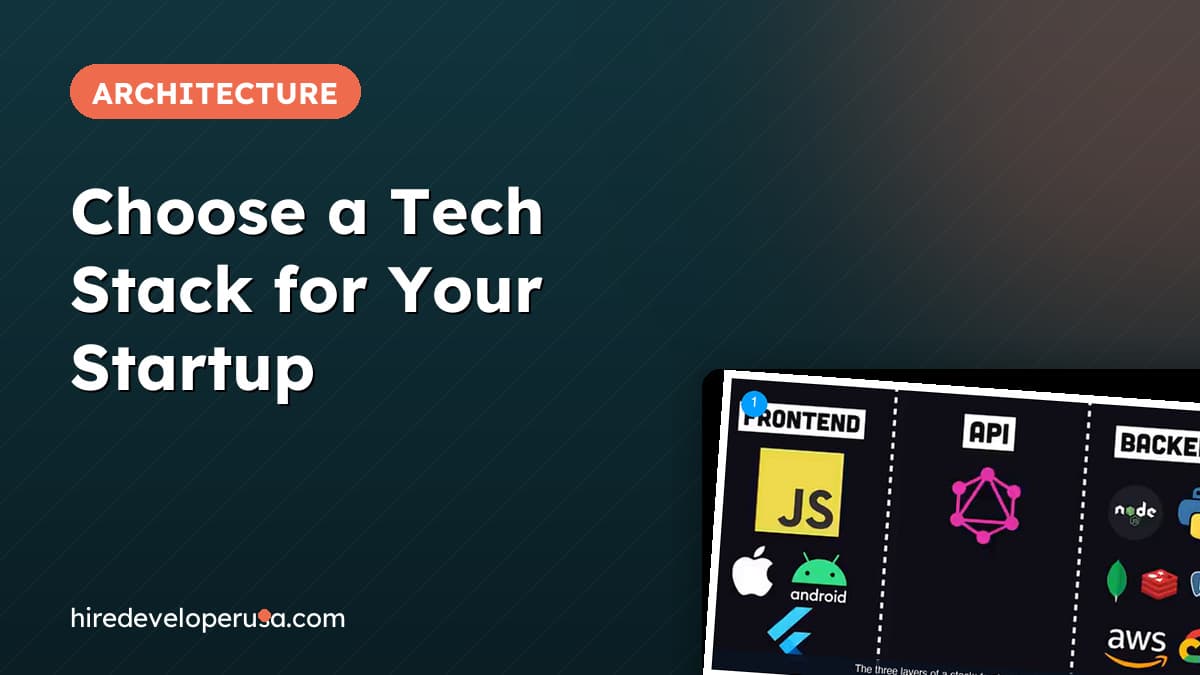
How to Choose a Tech Stack for Your Startup in 6 Steps
Every product is a stack of choices: a front end, a back end, and the APIs between them. Change one after launch and the bill is steep. This guide walks through the six decisions in order, assembles the fully loaded version, then shows the lean stack most early-stage products should actually ship.

September 20, 2026
How to Hire Salesforce Developers Who Will Not Break Your Org: Our Sourcing, Screening and Budget Checklist
Admin, developer or architect, five sourcing channels with realistic timelines, US rate bands by seniority, a 30-minute Apex review built on five red flags, and the paid trial that decides.
September 19, 2026
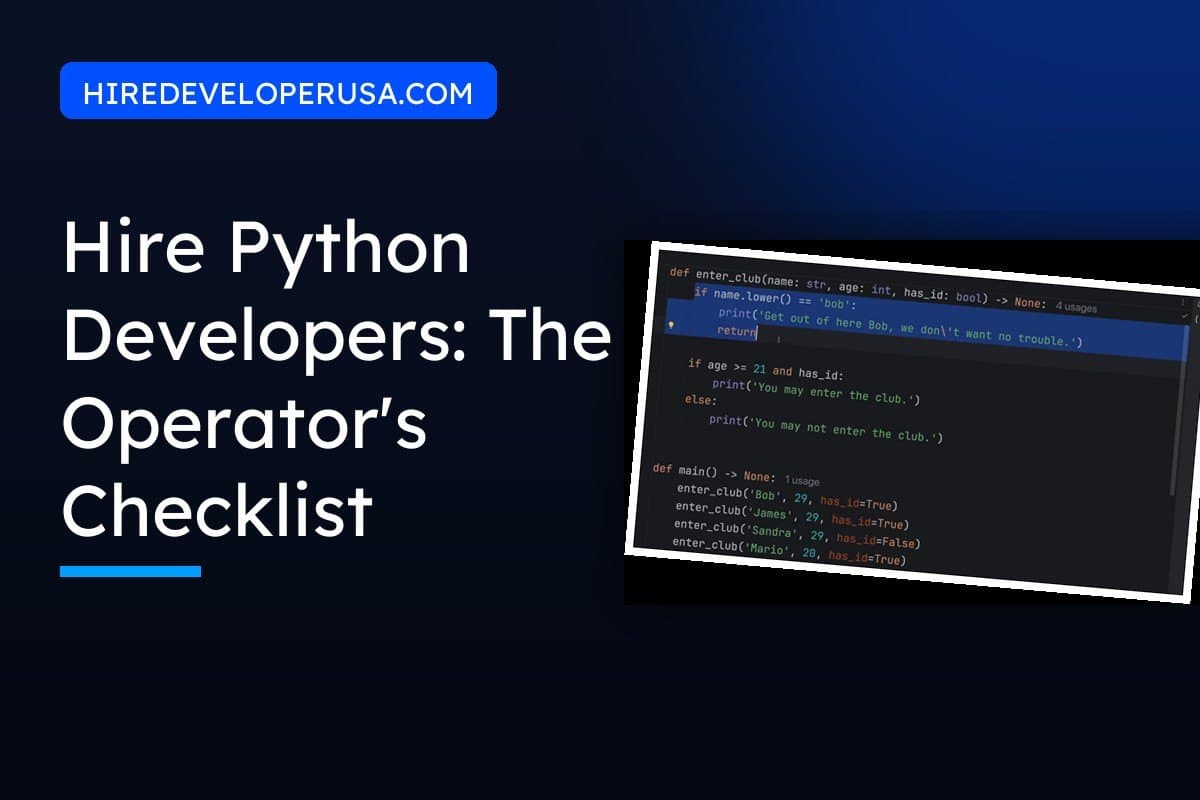
How to Hire Python Developers Without a Bad Hire: The Sourcing, Screening and Budget Checklist We Run Every Time
Four job shapes, five sourcing channels with realistic timelines, US rate bands by seniority, a 30-minute code-sample review built on five habits, and the paid trial that replaces the interview.

September 18, 2026
How to Write User Stories Developers Understand in 5 Steps
Most tickets reach a developer either as a solution with the problem left out, or as a wish with no way to tell when it is done. A user story fixes both: one sentence from the user's point of view, a few lines of acceptance criteria, and a six-letter check before the sprint starts.

September 16, 2026
How to Hire Laravel Developers Who Ship: The Five Code Signals We Check Before Paying for a Trial
Three job shapes, five sourcing channels with realistic timelines, US rate bands, a 40-minute code review that exposes seniority, and the six mistakes that cost Laravel buyers most.

September 16, 2026
How to Set Up a CI/CD Pipeline for a Startup in 6 Steps with GitHub Actions
Manual deployments work until someone mistypes the scp command or merges a branch whose tests never ran. Here are the two GitHub Actions workflows a small team needs: one that tests every pull request, one that builds and ships to the server on every push to main.
September 12, 2026
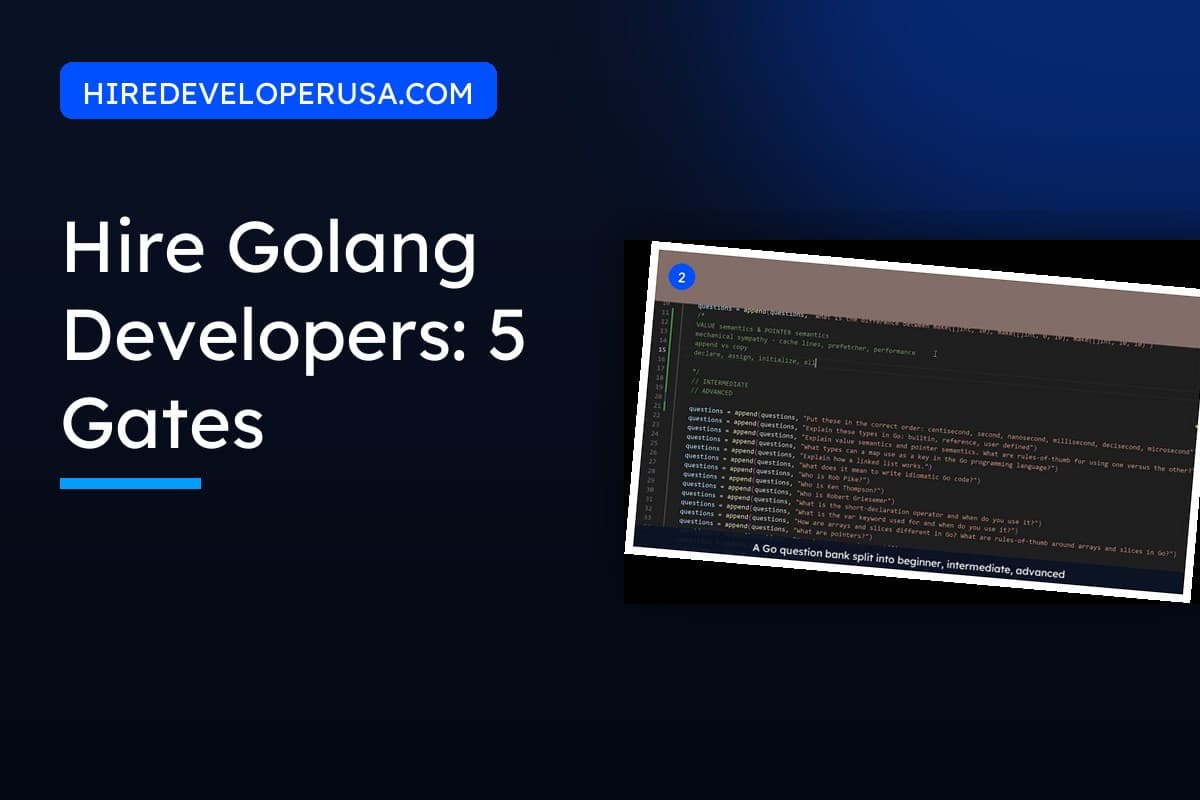
How to Hire Golang Developers: The Five Gates We Run Before Anyone Writes Code
Sourcing channels, five screening gates, the Go questions that separate production experience from a resume line, and the rate guardrails that hold when a project slips.
September 9, 2026
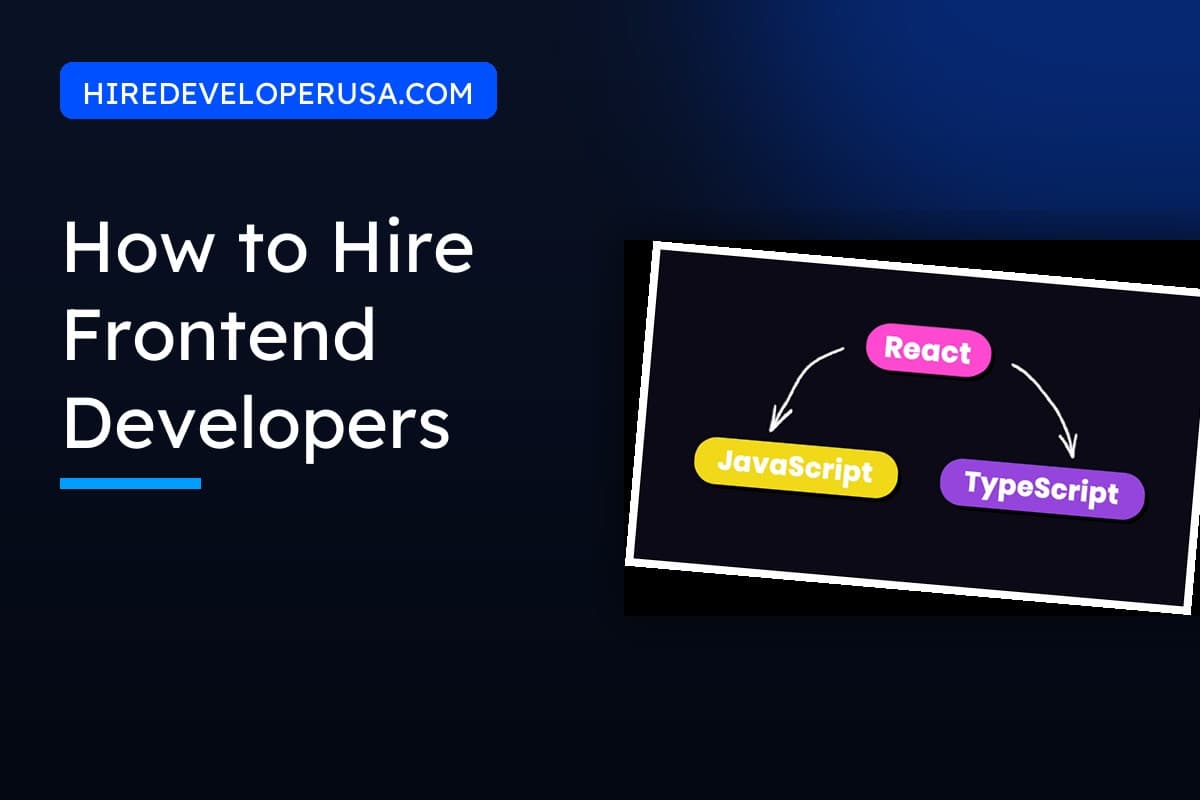
How to Hire Frontend Developers Without Buying a Rewrite
Frontend developers bill $35 to $125 an hour in the US. Here is where to source them, what to budget, and the five gates that separate a portfolio from someone who ships.

September 8, 2026
How to Hire Flutter Developers: The Six Gates That Predict a Good One
Flutter developers bill $35 to $128 an hour in the US. Here is where to source them, what to budget, and the six gates that separate a solid hire from a rewrite.
September 8, 2026
How to Onboard a Remote Developer in 6 Steps
A remote developer cannot pick up expectations, conventions and priorities by osmosis, so the first month goes on guesswork instead. Here is the sequence that removes it: six things to hand over deliberately, in the order they stop being guesses.

September 7, 2026
How to Get Paid on Time as a Freelance Developer, Without Chasing Anyone
Getting paid on time is a structure, not a personality trait: a deposit, short terms in the contract, an invoice with a real due date, and a follow-up schedule you set before you need it.
September 6, 2026
How Much Does It Cost to Hire Golang Developers in 2026? Real US Rates and the Premium Nobody Explains
Go talent runs $45 to $150 an hour on a vetted marketplace and $135 to $235 at an agency. Here is where the premium comes from, with four budgets worked out in dollars.
September 6, 2026
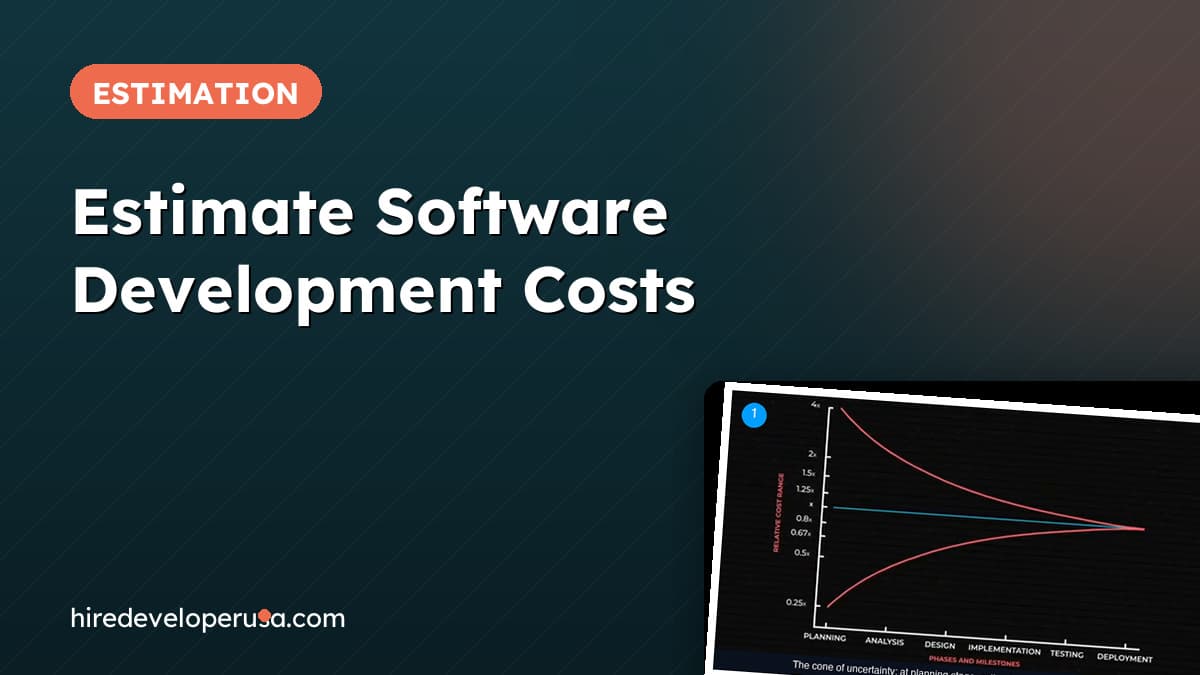
How to Estimate Software Development Costs in 6 Steps
The first number anyone says about a software project tends to become the budget. Here is how to produce one that survives contact with development: a range instead of a price, four ballpark methods, then story points and velocity once the team is building.
September 5, 2026
How Much It Really Costs to Build an App: Every Line Item, MVP to Launch
An MVP runs $25,000 to $60,000 and a version one runs $70,000 to $250,000 in the US. Here is the hour by hour math behind those numbers.
September 4, 2026
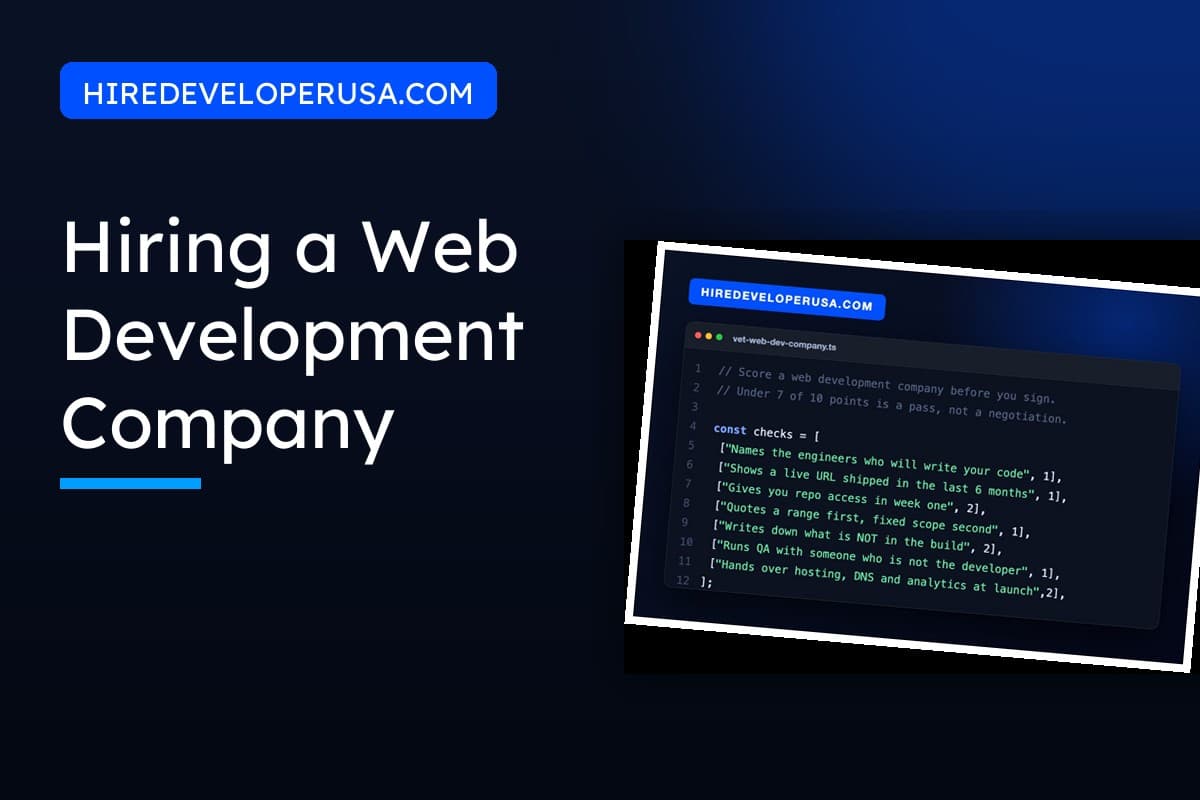
How to Hire a Web Development Company in 2026: Scope, Rates, and the Week-One Test
US agencies run $120 to $300 an hour, vetted marketplace teams $60 to $150. The price band matters less than scoping the build before you shop and testing the team in week one.
September 4, 2026
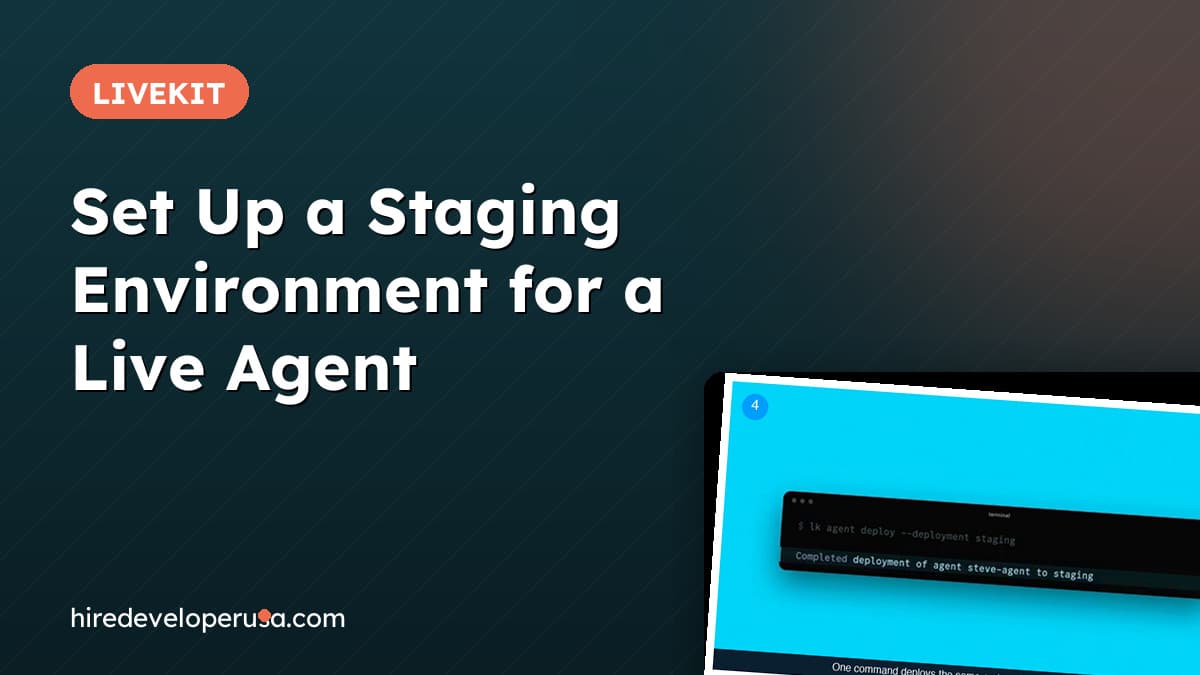
How to Set Up a Staging Environment for a Live Voice Agent in 6 Steps
Testing a prompt change on a live voice agent used to mean standing up a whole second agent with its own project, keys and secrets. Agent deployments replace that with one flag, and the two copies can no longer drift.

September 1, 2026
Hire Software Developers in San Diego Without Bidding Against Qualcomm
San Diego developers run $85 to $150 an hour local, $150 to $275 at an agency, and $105k to $200k in-house. Here are the bands, the loaded costs and a week-one plan.

August 30, 2026
Hire Software Developers in Chicago Without Paying Coastal Rates
Chicago developers run $70 to $130 an hour local, $130 to $250 at an agency, and $95k to $185k in-house. Here are the bands, the loaded costs, and a vetting plan.
August 25, 2026
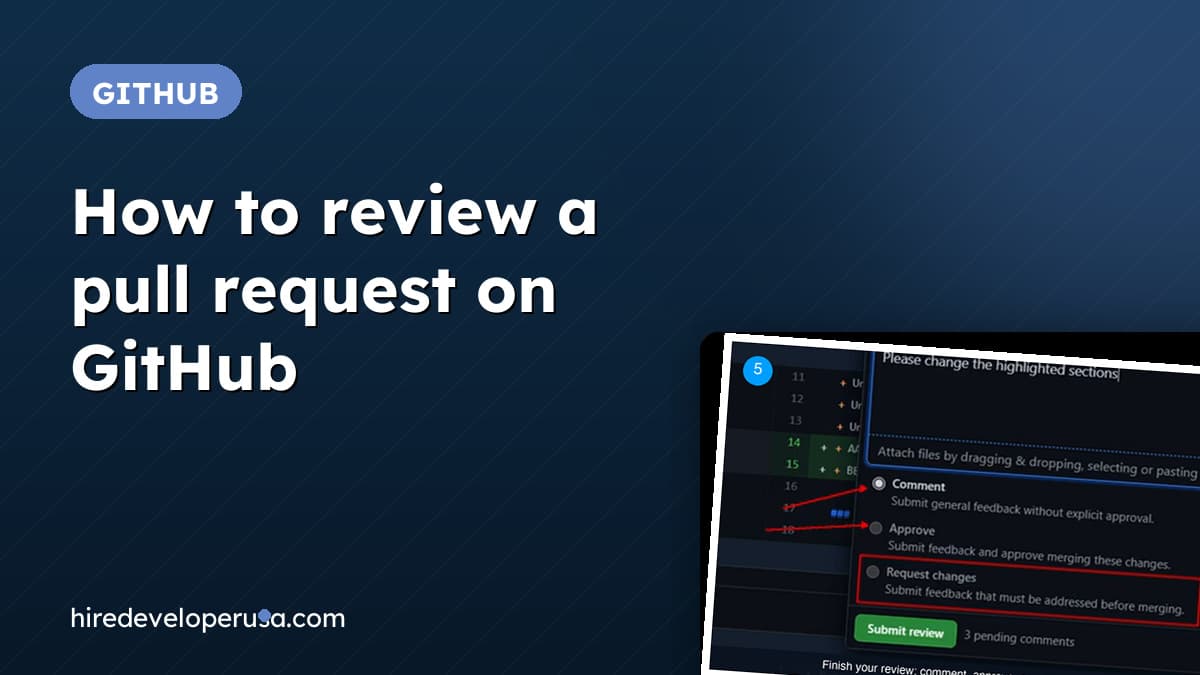
How to Review a Pull Request on GitHub in 6 Steps
GitHub gives you two ways to comment on a diff and they sit in the same box. One notifies everyone instantly, the other collects your notes into a single review. Here is the flow that keeps feedback readable.
August 24, 2026
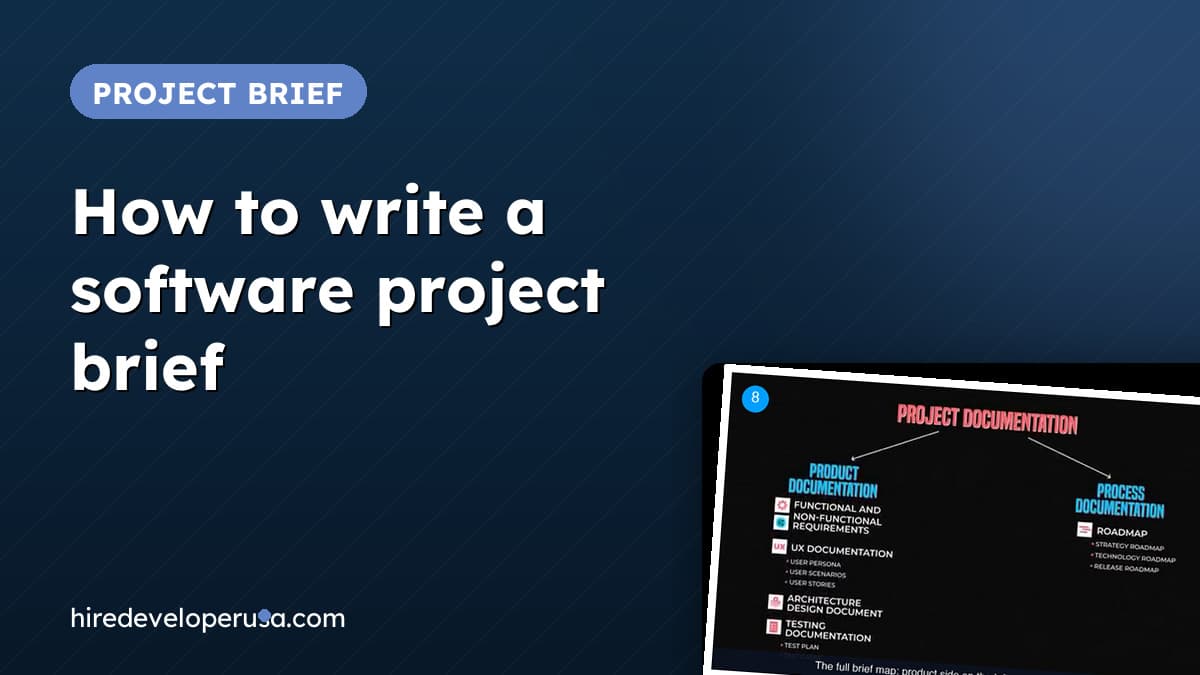
How to Write a Software Project Brief in 6 Steps
A brief has to answer two questions in writing: what the product should be, and how it gets built. Here are the six pieces that make one usable by an engineer who has never met you.

August 23, 2026
Hire Developers in India: What the Rate Card Never Tells You
India rates run $15 to $80 an hour against a $105 US mid-band. The saving is real, but a $38 hour lands nearer $51 once you price your own side. Here is the honest math.
August 19, 2026
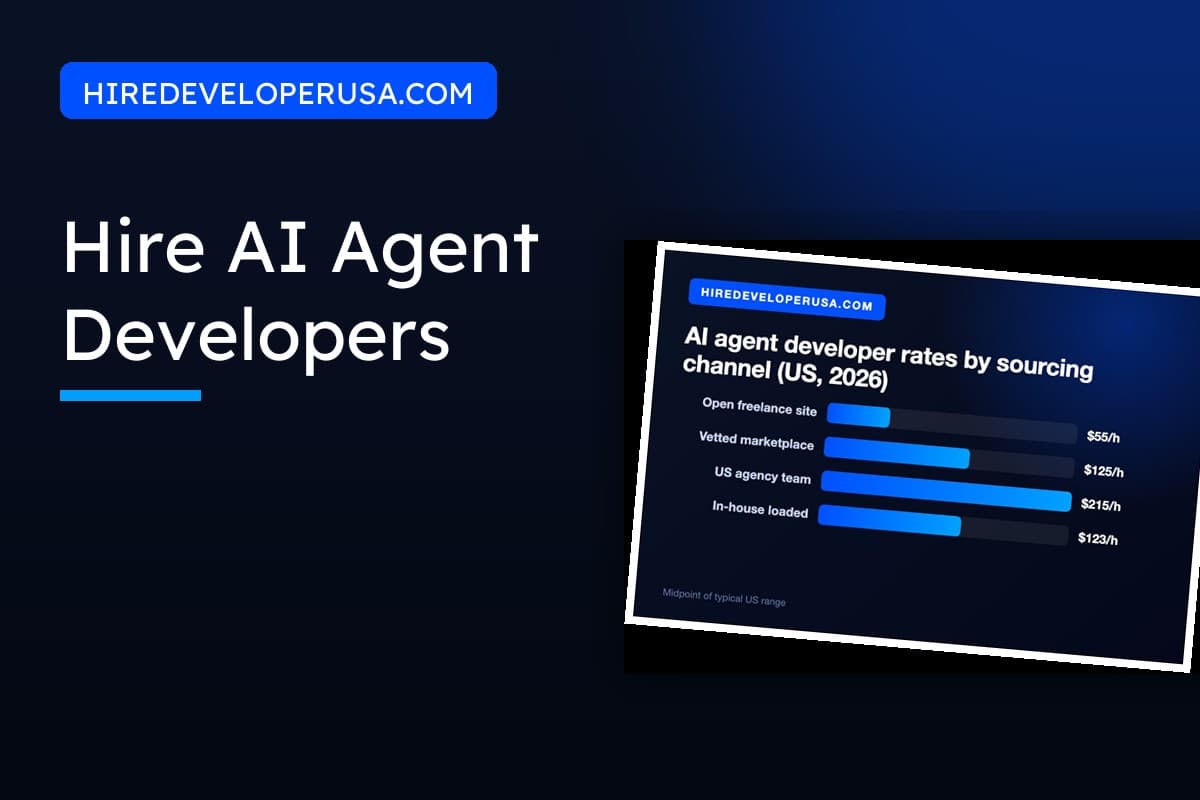
How to Hire AI Agent Developers in 2026: What They Cost and How We Vet Them
Vetted AI agent developers bill $70 to $180 an hour in the US. Where to find them, the seven skills that separate production engineers from demo builders, and how to scope the first project.
August 18, 2026
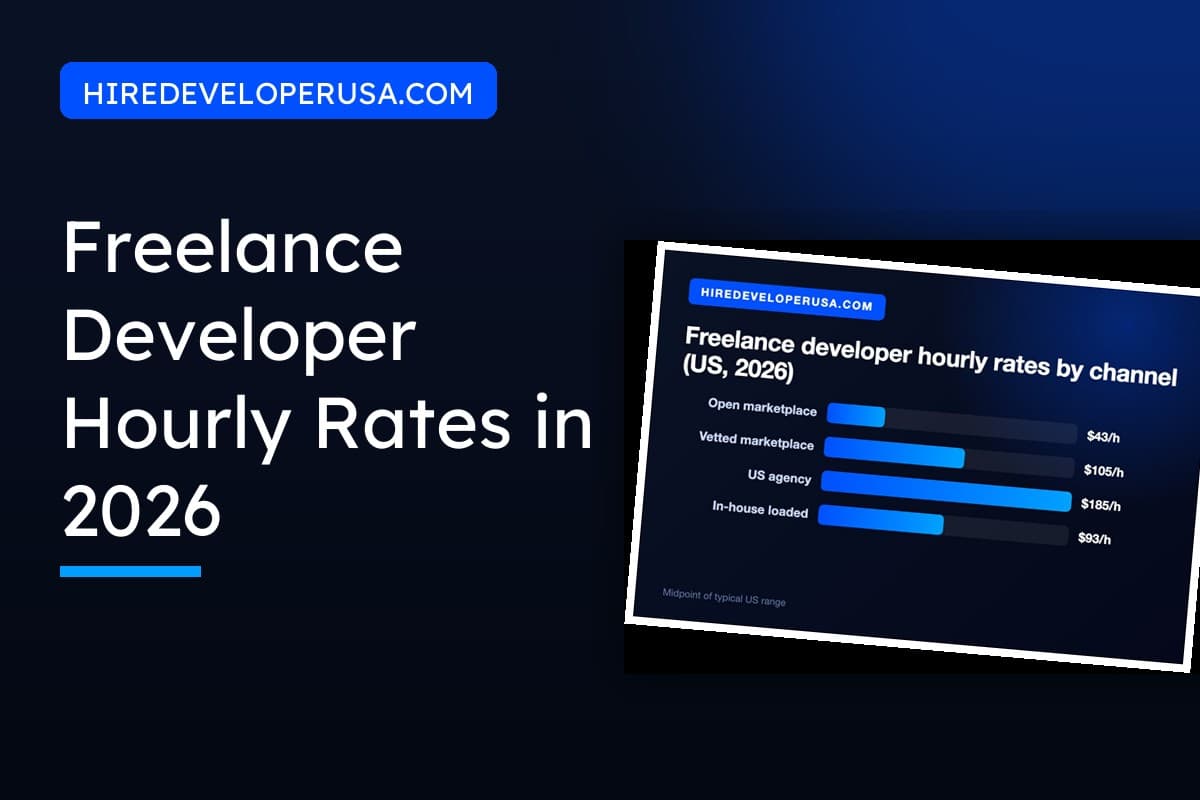
Freelance Developer Hourly Rates in 2026: What US Companies Actually Pay
Vetted marketplaces run $60 to $150 an hour, agencies $120 to $250, open platforms $25 to $60. Here is what sets each band, with a worked twelve-week budget.
August 16, 2026
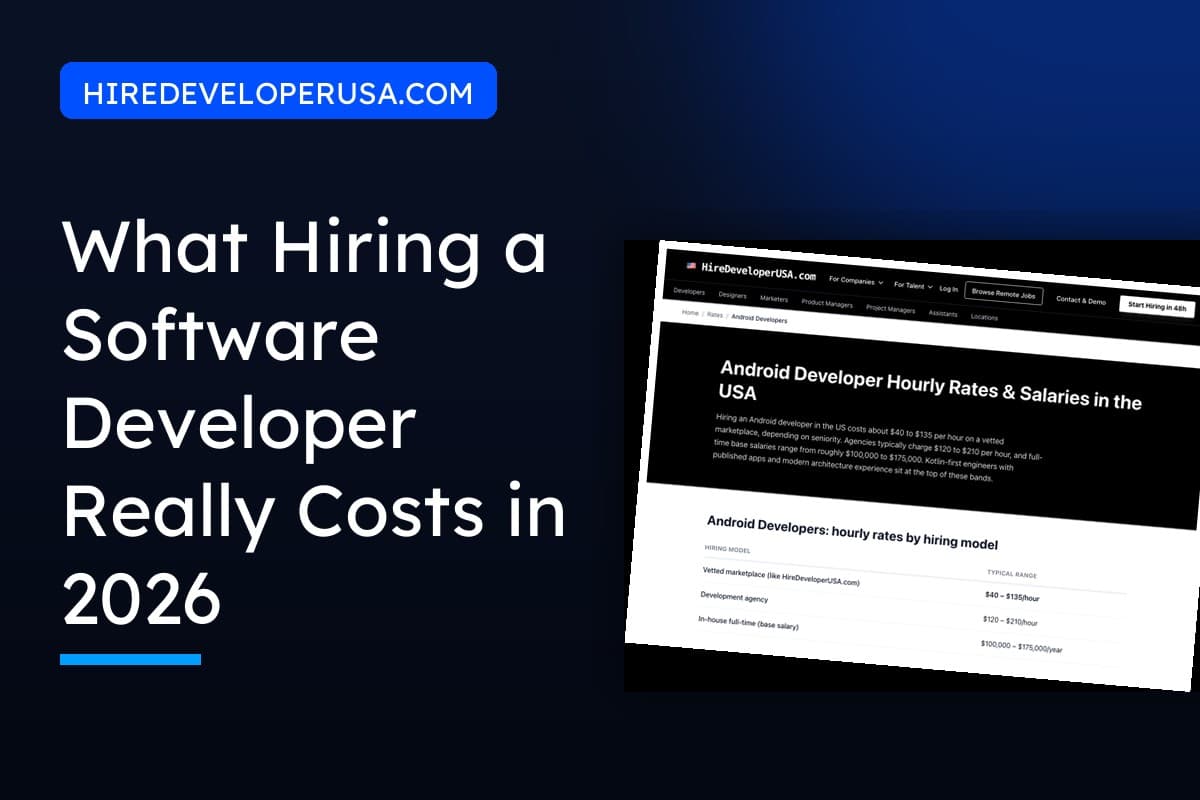
How Much Does It Cost to Hire a Software Developer in 2026? Real US Numbers
Vetted marketplaces run $60 to $150 per hour, agencies $120 to $250, and an in-house hire costs far more than the salary on the offer letter. Here is the full budget picture, model by model.