
Key takeaways
- →Flutter developers bill $35 to $128 an hour on US marketplaces, $110 to $205 at agencies, and earn $95,000 to $168,000 base in house.
- →One Flutter codebase runs about 220 engineering hours for a mobile MVP against about 375 hours for separate iOS and Android builds.
- →Six gates decide the hire: store record, architecture, native bridging, performance profiling, release ownership and scoping.
- →A paid six to eight hour trial task costs $400 to $800 and tells you more than any interview.
- →Hold the Apple and Google accounts, the signing keys and the repository in your own name from day one.
You can hire Flutter developers in the US for $35 to $128 an hour on a vetted marketplace, $110 to $205 an hour through an agency, or $95,000 to $168,000 in base salary if the role goes in house. A focused search closes in one to three weeks: a two hour screen, one paid trial task, and a first sprint that has to end in a real build on a real device.
The rate is the easy part. The number that decides whether your app survives its second year is how many apps the candidate has actually shipped to both stores and kept alive through a framework upgrade. What follows is the operator version of that search: how to confirm Flutter is the right stack, what the US market charges, where the candidates are, and the six gates each of them should clear before you sign anything.
Confirm Flutter is the hire you need
Flutter is Google's UI toolkit. Developers write Dart, and the framework draws every pixel itself instead of delegating to platform widgets. That is why a Flutter screen looks the same on a new iPhone and a four year old Android handset, and why the framework keeps winning design led products with heavy custom motion.
The realistic alternative for most US teams is React Native, which runs on JavaScript and TypeScript and therefore draws from a deeper hiring pool. The rate bands are close enough that the decision is about your existing team rather than your budget, and you can put the two side by side on our React Native rate page.
Three rules settle it:
- Hire Flutter when the product is design led, the same interface has to look identical on both platforms, and you want one engineer covering iOS and Android.
- Hire React Native when you already run a React web team, or you need to staff up quickly from a larger pool.
- Stay native when the app lives on hardware: Bluetooth peripherals, camera pipelines, background location, augmented reality. Cross platform still works there, but the native module work eats the savings.
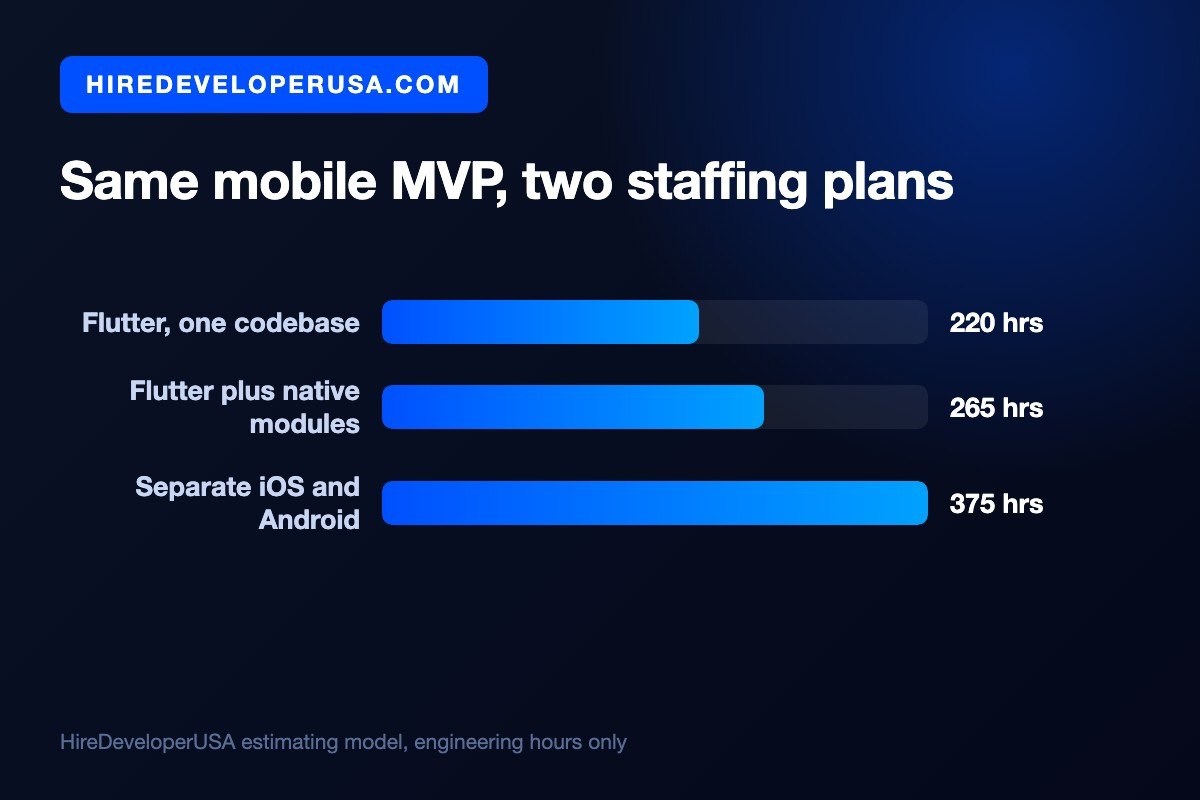
The staffing math is the strongest argument for cross platform. In our estimating model a straightforward mobile MVP is about 220 engineering hours on one Flutter codebase, roughly 265 once you add a couple of native modules, and about 375 as separate iOS and Android apps. That gap is a second hire, a second review cycle and a second release calendar.
What Flutter developers cost in the US
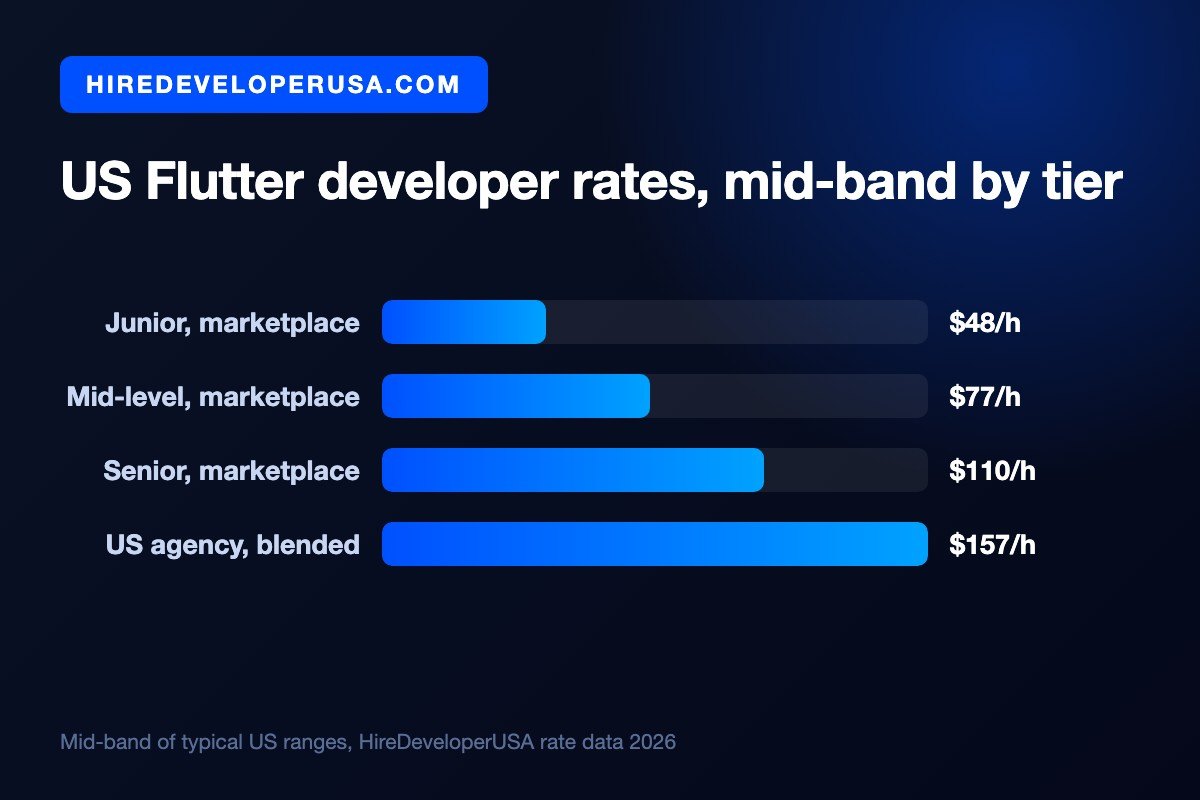
Flutter developers bill $35 to $128 an hour on vetted US marketplaces, and the band splits cleanly by seniority: $35 to $62 for junior work that needs supervision, $62 to $92 for a mid level engineer who can own a feature, and $92 to $128 for a senior who can own the architecture, the release pipeline and the native edges. Agencies charge $110 to $205 an hour blended across design, engineering, QA and project management. Full time salaries run $95,000 to $168,000 base, and you should budget another 20 to 30 percent on top for payroll taxes, benefits and hardware.
| Engagement | Typical US rate | Time to first commit | Best for |
|---|---|---|---|
| Vetted marketplace contractor | $35 to $128 per hour | Days | One to three engineers on a defined scope |
| Agency or studio | $110 to $205 per hour, blended | One to three weeks | A full team with PM and QA attached |
| Full time in house | $95,000 to $168,000 base | Six to twelve weeks | A product with a multi year roadmap |
| Fractional senior, 10 to 20 hours a week | $92 to $128 per hour | Days | Architecture and code review over a cheaper build team |
Hold those rates against the scope. A mid level contractor at the $77 midpoint building the 220 hour MVP above is about $16,900 of engineering, before design, QA and project management. The same scope at an agency blended rate lands near $34,500. Neither number is wrong, because they buy different things: one buys hours, the other buys a team that manages itself. For the full line by line model, see our breakdown of what it costs to build an app.
Where to find Flutter developers, and what each channel costs you in time
The Flutter pool is real but thinner than the React Native pool. Our own network lists about 5,600 Flutter developers against roughly 7,900 React Native developers, and you will feel that ratio in every channel you try. Plan for a shorter shortlist and a higher share of candidates who have learned the framework but never shipped to a store.
- Vetted marketplaces. The fastest route to a shortlist that has already passed a technical screen. You interview two or three people instead of thirty, in days rather than weeks.
- Job boards and LinkedIn. The widest funnel and the most noise. Expect three to six weeks and a lot of resume reading, which is worth it mainly when you are hiring full time.
- pub.dev. The Dart package registry is an underrated sourcing channel. A developer who maintains a package with real usage, an issue tracker and a changelog has already proven what a portfolio cannot.
- Community rooms. The Flutter Discord, r/FlutterDev and conference talk archives surface people who answer other developers' questions in public. Read three of their answers and you know how they think.
- Agencies. The quickest way to a whole team, and the only channel where you do not choose the individuals. Ask which named engineer is on your project and for how many hours a week.
Whatever the channel, write the job post the way an engineer reads it: name the platforms, the store accounts, the state management library already in the codebase, the oldest device you support, and whether native modules exist. Vague posts attract vague candidates. If you want to see the wider pool first, start from mobile app developers and narrow from there.
The six gates every Flutter candidate should clear
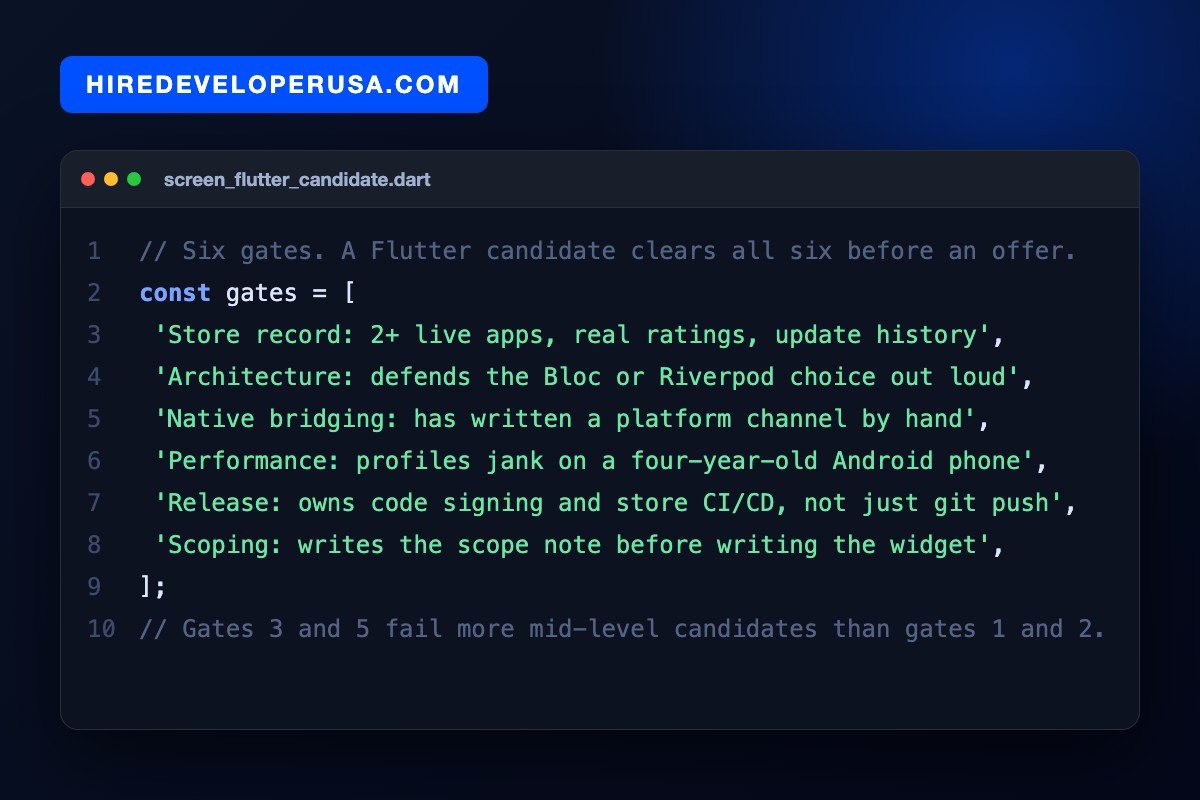
Run all six in one sitting of about two hours: thirty minutes on the store record, forty five on architecture and native work, thirty on performance and release, fifteen on how they scope. Clearing all six earns a trial task. Failing gate three or gate five usually means a mid level engineer priced as a senior.
- Store record. Ask for App Store and Google Play links, then read the update history. Two or more live apps with recent updates beats any portfolio site. An app last updated three years ago says they built it and walked away.
- Architecture, defended out loud. Bloc, Riverpod and Provider are all defensible choices. Naming one is not an answer. Ask where business logic lives, what a widget is allowed to know, and what happens to that structure when the app doubles in screens.
- Native bridging. Ask about the last time they dropped into Swift or Kotlin through a platform channel. Every serious Flutter app hits this eventually: a permission, a payment SDK, a background task. A candidate who has never crossed that line is a widget assembler.
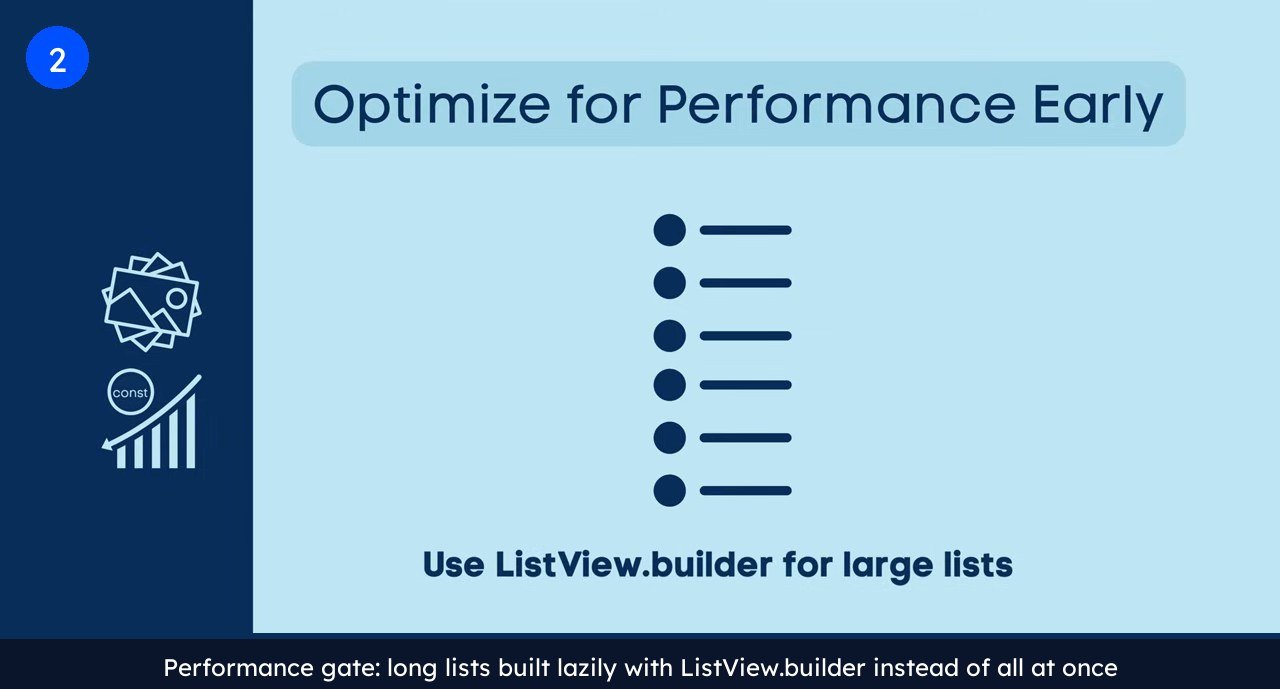
- Performance on real devices. Ask what they do when a list stutters. You want the DevTools timeline, rebuild counts, const constructors and lazy list building, checked on an old Android phone rather than a simulator running on a fast laptop.
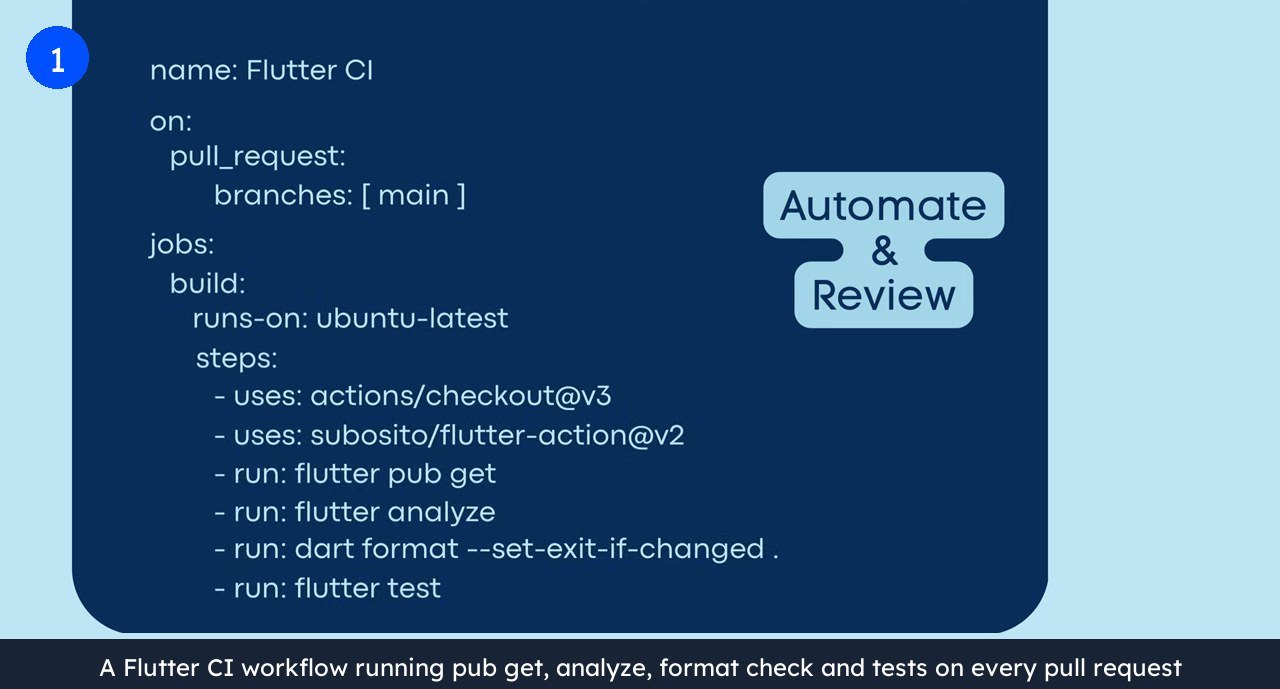
- Release ownership. Code signing, provisioning profiles, TestFlight, the Play internal track, and a pipeline that analyzes, formats and tests the code on every pull request. This gate fails more candidates than any other.
- Scoping and writing. Hand them a two paragraph feature idea and ask for a short scope note before any code. If the note comes back full of questions and edge cases, you have found someone who will not surprise you in week six.
The paid trial task worth $400
Interviews reward talkers. A small paid task rewards shippers, and at six to eight hours it costs $400 to $800 at mid to senior rates. That is around one percent of a version one budget spent to remove the most expensive risk in the project.
Keep the brief tight, and identical for every candidate:
- One screen that lists items from a public API you name.
- Loading, empty, error and offline states, all four visible.
- A local cache so the screen still renders something without a network.
- One widget test and one unit test.
- A README of a page or less explaining the state management choice.
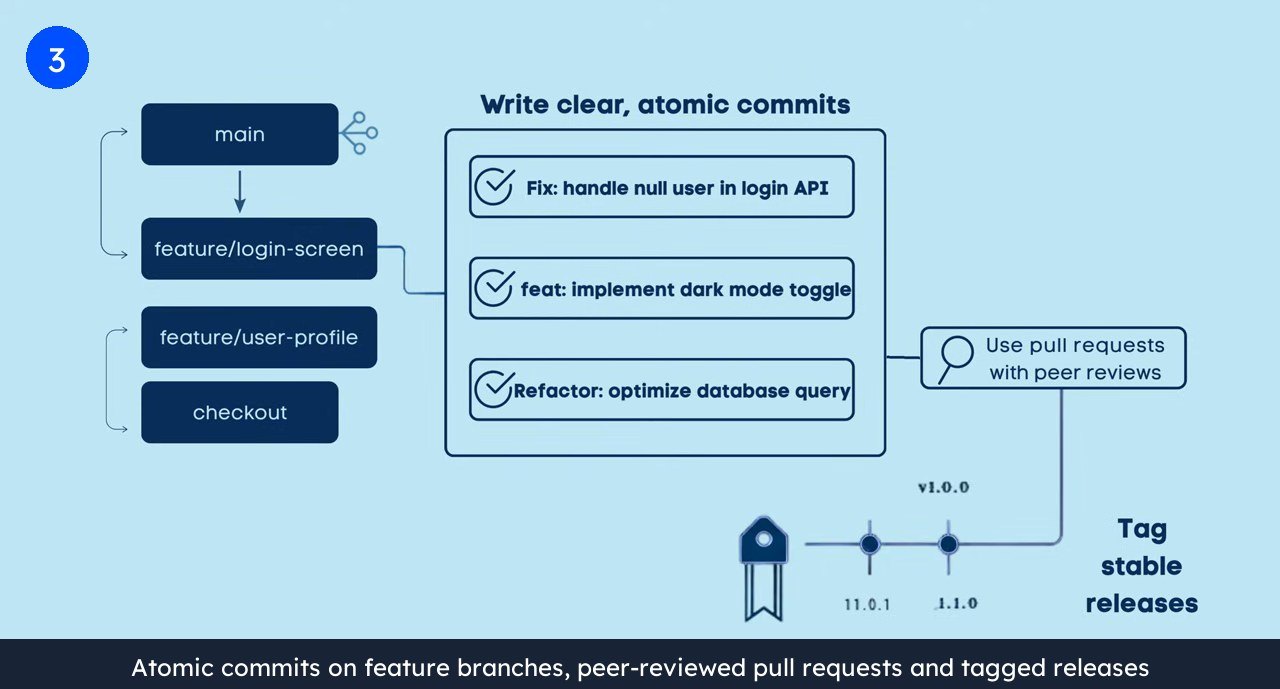
Then grade what the brief did not spell out. Did they ask a question before starting? Are the commits atomic and readable? Does the list build lazily? Is there one file where the API call, the cache and the widget are tangled together? Code answers the questions candidates talk their way around in an interview.
Red flags in a Flutter portfolio
- Demos instead of live apps. Clones and course projects show that a tutorial was followed, not that a release survived store review.
- setState everywhere in a large app. Perfectly fine on a single screen. Across forty screens it is a rewrite waiting to be scheduled.
- No test files at all. Flutter ships with a test framework. Skipping it in a two year old codebase is a choice, and it is the wrong one.
- Flutter proposed for everything. A candidate who suggests Flutter web for your marketing site is optimizing for their own comfort, not for your traffic.
- A rate far under the band, plus instant full time availability, plus no store links. Any one of those is normal. All three together is a pattern.
The positive signals are just as legible: published pub.dev packages, a clear account of migrating a codebase through a breaking Flutter release, a story about an App Store rejection and what they changed, and code review comments that read like teaching. That is what sits behind a $110 hour, and what separates it from a $48 hour that needs supervision.
Week one: what a good hire ships first
Set the bar on day one and you will know by Friday whether the hire works.
- The accounts stay yours. The Apple Developer and Google Play accounts, the signing keys and the GitHub organization belong to your company, and the developer is invited into them. This one rule prevents the most expensive handover problem in mobile.
- The week one deliverable is a build, not a demo. A real binary in TestFlight or the Play internal track, produced by a pipeline, installed on a phone you are holding. Screen recordings do not count.
- Write the contract around outcomes. IP assignment, a weekly demo, code in your repository from the first commit, and a two week trial period before anyone talks about a longer engagement.
- Put the device floor in writing. Name the oldest phone you support and test on it. Performance complaints in month three are almost always a scope question nobody asked in week one.
Your next step
Shortlist three candidates, run the two hour screen against the six gates, then pay all three for the same trial task. At mid level rates that is roughly $1,500 and one week of calendar time, and it replaces a guess with evidence. Extend the one who shipped, and keep the runner up warm for the next sprint.
If you would rather skip the sourcing phase, we can put pre-screened Flutter developers in front of you in about 48 hours and you still run the gates yourself. Sourcing is the part worth delegating. The screen is the part you should never outsource.
Frequently asked questions
How much does it cost to hire a Flutter developer?
On vetted US marketplaces, $35 to $62 an hour for junior work, $62 to $92 for mid level, and $92 to $128 for a senior engineer who owns architecture and releases. Agencies bill $110 to $205 an hour blended, and a full time hire costs $95,000 to $168,000 in base salary plus 20 to 30 percent for payroll taxes, benefits and hardware. A 220 hour MVP at the mid level midpoint of $77 is about $16,900 of engineering.
Should I hire Flutter developers or React Native developers?
Hire Flutter when the product is design led and the interface has to look identical on both platforms. Hire React Native when you already have a React web team or need to staff up fast, since the JavaScript pool is deeper. Rates are close enough that the decision should follow your existing team and codebase, not the hourly difference.
How long does it take to hire a Flutter developer?
Days on a vetted marketplace where candidates are pre-screened, three to six weeks through job boards, and six to twelve weeks for a full time hire once notice periods are counted. Budget one extra week on top for the paid trial task, which is the step that actually prevents a bad hire.
Can one Flutter developer build both the iOS and Android app?
Yes for most product apps, which is the entire economic argument for the framework. The exceptions are native modules, store operations and design. A single strong Flutter engineer can cover both platforms, but plan for a designer, and expect native work whenever the app touches Bluetooth, cameras, background location or platform specific payments.
Hire vetted talent