
Key takeaways
- →A one platform MVP costs $25,000 to $60,000 and takes 8 to 14 weeks; a full version one costs $70,000 to $250,000.
- →A typical MVP is about 560 hours of work. The same 560 hours invoices at $22,400 offshore, $42,000 on a vetted marketplace and $103,600 at a US agency.
- →Mobile and backend engineering is about 63 percent of an MVP budget, which is why feature cuts save money and design cuts do not.
- →Shipping cross-platform instead of two native codebases keeps $50,000 or more in a version one budget.
- →Budget 15 to 25 percent of the build cost per year for maintenance, plus hosting and third party services on top.
Building an app in the US costs $25,000 to $60,000 for a one platform MVP, $70,000 to $150,000 for a cross-platform version one, and $120,000 to $250,000 if you ship separate native iOS and Android codebases. Add payments, live data or healthcare compliance and the floor moves to $250,000. Those are the numbers. The rest of this article is the part a quote never shows you: the hour budget underneath them, and the handful of decisions that move your total by six figures without changing anything the user sees.
Two variables drive every estimate you will ever receive. The first is scope, measured in hours. The second is the blended rate of the people doing those hours. Get both on paper and an app quote stops being a mystery and becomes arithmetic you can check yourself.
The five price tiers, and which one you are actually in
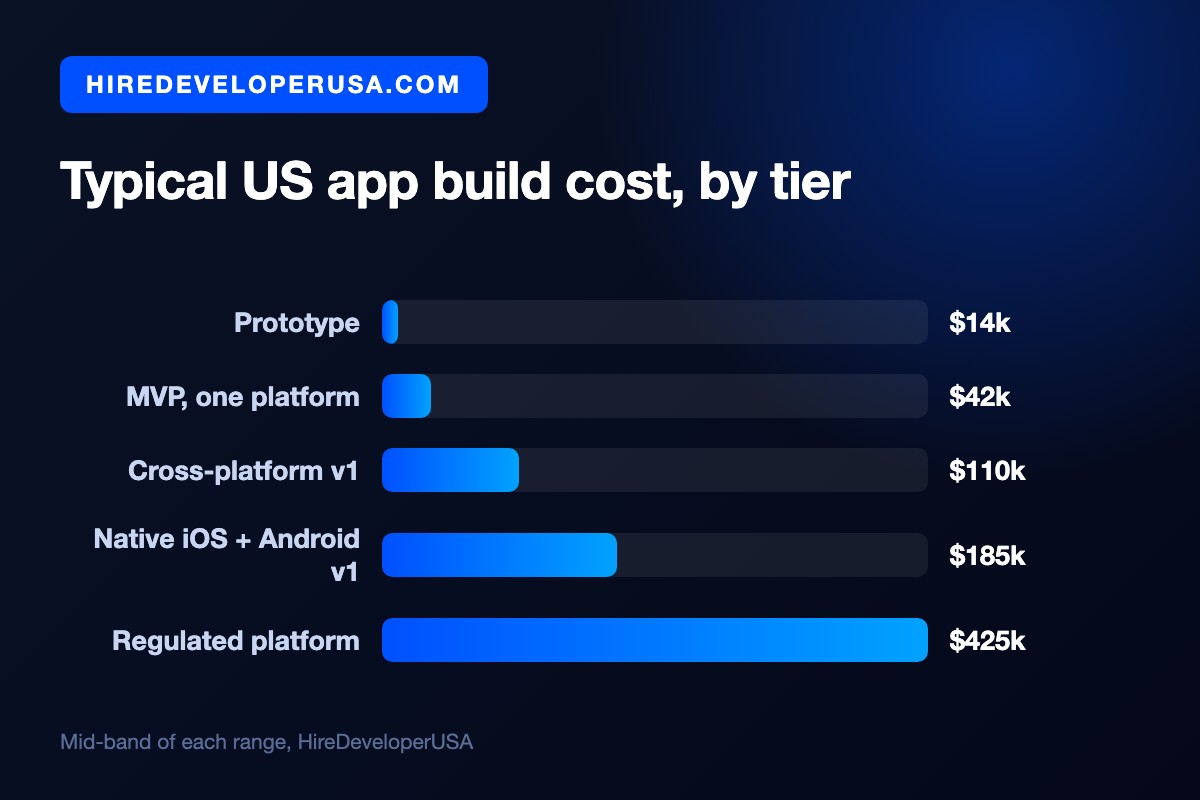
Almost every app brief lands in one of five buckets. Find yours before you talk to anyone, because the gap between two adjacent tiers is larger than any discount you will ever negotiate.
| Build tier | Typical US range | Timeline | What that actually buys |
|---|---|---|---|
| Clickable prototype | $8,000 to $20,000 | 2 to 4 weeks | Designed flows you can test on real users, no working backend |
| MVP, one platform | $25,000 to $60,000 | 8 to 14 weeks | Six to eight core screens, login, one integration, real data |
| Cross-platform version one | $70,000 to $150,000 | 4 to 6 months | iOS and Android from one codebase, admin panel, analytics |
| Native iOS and Android version one | $120,000 to $250,000 | 5 to 8 months | Two codebases, deeper hardware and platform features |
| Regulated or real-time platform | $250,000 to $600,000 | 8 to 14 months | Payments, HIPAA or SOC 2 work, live data, legacy integrations |
Buyers routinely describe tier three and budget for tier two. That mismatch is the most common reason an app project stalls at seventy percent complete and then quietly dies. If your brief contains two user types, a payment flow and a dashboard, you are not scoping an MVP. You are scoping a version one, and the honest number is north of $70,000.
Where the money goes in a $42,000 MVP
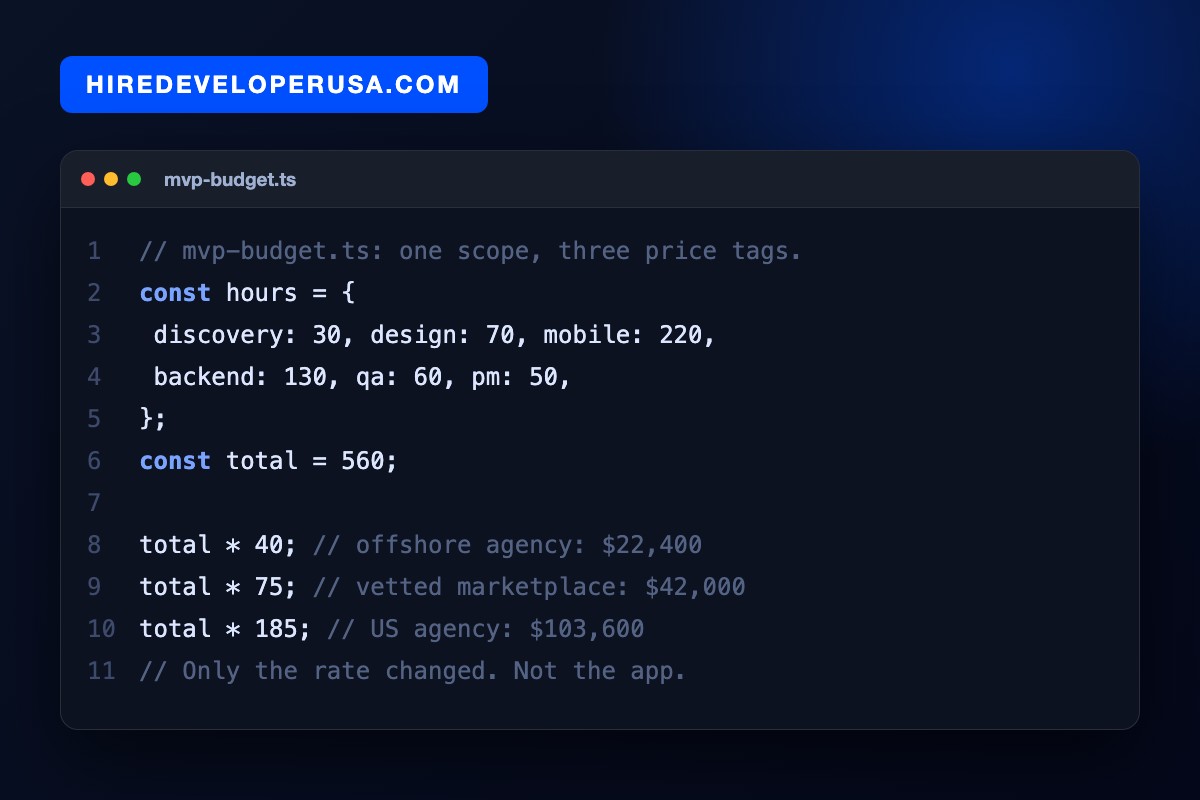
Take the midpoint of the MVP tier, roughly $42,000, and work backwards. A one platform MVP delivered by a small vetted team is about 560 hours of work, split across six line items:
- Discovery and scope, 30 hours. Flows, screen inventory, acceptance criteria. Skipping this does not save 30 hours, it relocates them into rework at three times the price.
- UX and UI design, 70 hours. Eight core screens plus a small design system, so that the next twenty screens cost a fraction of the first eight.
- Mobile engineering, 220 hours. The single largest line, and the first place every scope cut should look.
- Backend and API, 130 hours. Auth, data model, one third party integration, deployment pipeline.
- QA and release, 60 hours. Device matrix, store submission, and the one or two rejections you should plan for rather than be surprised by.
- Project management, 50 hours. Roughly four hours a week across a twelve week build.
Engineering, mobile plus backend, is 350 of those 560 hours, about 63 percent of the budget. That ratio explains why feature cuts work and design cuts do not. Deleting a screen from the design file saves a few hundred dollars. Deleting the feature behind that screen saves several thousand.
Who you hire moves the number more than what you build
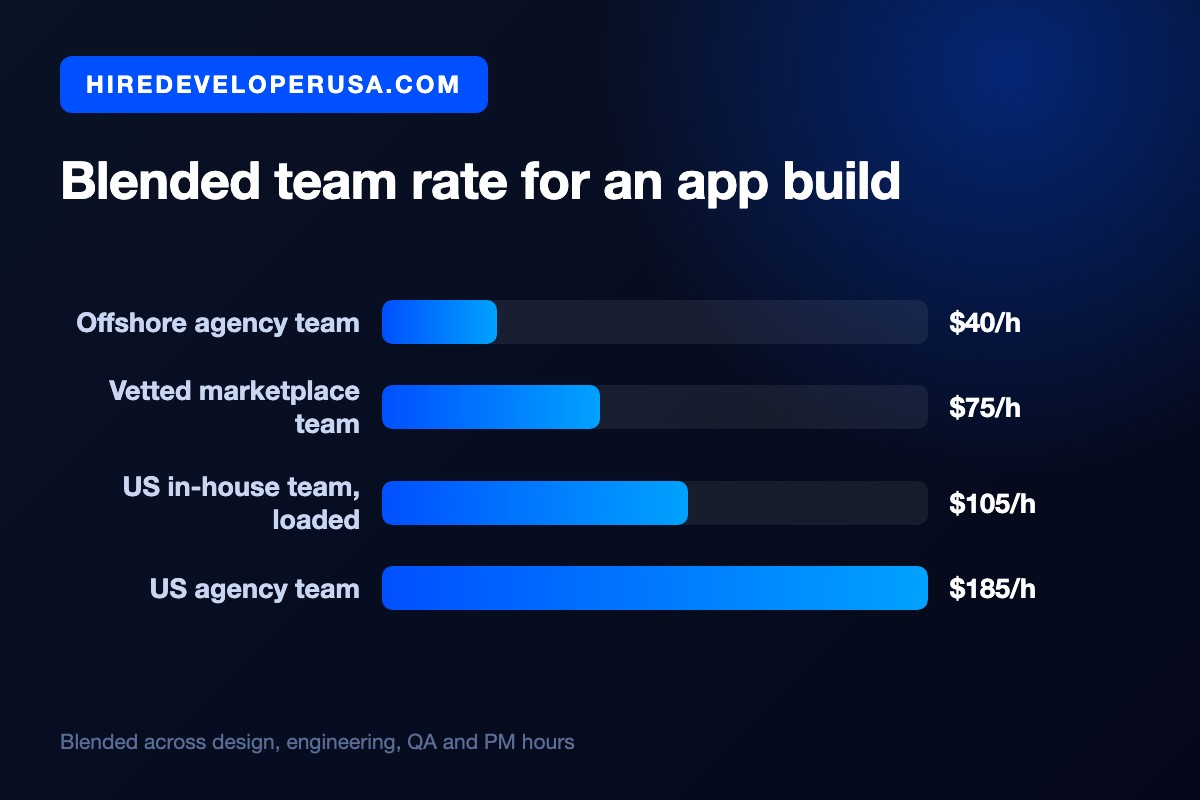
Same 560 hours, four very different totals. A blended team rate averages design, engineering, QA and project management hours together, which is why it sits below what a senior engineer bills on their own.
- Offshore agency, around $40 an hour blended. 560 hours comes to $22,400. The savings are real and so is the overhead: a nine to twelve hour timezone gap and a written specification discipline most first time buyers have not built yet.
- Vetted marketplace team, around $75 an hour blended. $42,000. Individual senior engineers bill $60 to $150 an hour on US focused platforms, and the blend lands lower because design, QA and coordination hours cost less than senior engineering hours.
- US in-house team, around $105 an hour loaded. A $150,000 average salary plus roughly 30 percent in payroll taxes, benefits, equipment and software is about $195,000 a year. Spread over roughly 1,850 productive hours, that is $105 an hour, and it does not include the weeks of recruiting that come first.
- US agency, around $185 an hour blended. $103,600 for the identical scope. You are paying for an account manager, a bench of substitutes and someone to call when a developer leaves mid sprint.
Nothing about the product changed across those four lines. For the rate side broken out by role and seniority, see our detailed guide to what it costs to hire a software developer.
Cross-platform or native: the decision worth $50,000
Mobile engineering is the largest line in the budget, so the framework choice compounds through everything else. Writing iOS and Android separately turns those 220 MVP hours into roughly 350 to 400. At a $75 blended rate that is $10,000 to $13,500 more on an MVP, and at version one scale the gap in the tier table opens to $50,000 or more.
Cross-platform is the correct default for most business apps. React Native and Flutter both ship one codebase to both stores, and neither will be the constraint on a marketplace, a booking flow, a delivery app or an internal tool. Go native when you lean on heavy camera or sensor work, background processing, deep platform integrations such as widgets and watch apps, or sustained high frame rate graphics.
Hiring follows the same logic. One React Native developer or Flutter developer covers both platforms, where native means two specialists, two hiring loops and two release processes. Current bands are on our React Native developer rates page.
Five features that quietly double an app quote
Estimates are not driven by screen count. They are driven by the number of states a developer has to handle. These five add the most states per dollar:
- A second user role. Every role brings its own screens, permissions and edge cases. Two roles is not twice one role, but it is rarely less than one and a half times.
- Real-time anything. Chat, live tracking, presence and collaborative editing need infrastructure a request and response app never touches. Budget 80 to 200 additional hours.
- Payments. Taking money means refunds, failed charges, disputes, receipts and tax handling. The happy path is a day of work. Everything around it is a month.
- Offline support. Local storage plus sync plus conflict resolution is genuinely hard, and it is one of the few places where an underpriced team will ship something that looks finished and is not.
- Integration with a system you do not control. An aging ERP, a hospital record system, a bank feed. The integration itself is not the work. The undocumented behavior is.
None of these are reasons not to build. They are reasons to know which of them sit in your brief before you read a number, so you can tell a fair estimate from a hopeful one.
The costs that are not in the build quote
The build is a one time number. The app is not. Plan year one around these:
- Store accounts. The Apple Developer Program is $99 a year. A Google Play developer account is a $25 one time fee.
- Hosting and infrastructure. $200 to $2,000 a month for an early stage app, depending on traffic and how much data you keep.
- Third party services. Auth, push notifications, analytics, error tracking and transactional email typically run $100 to $800 a month before you have real volume.
- Maintenance. A common planning rule is 15 to 25 percent of the build cost per year, and it is not discretionary. iOS and Android both ship annual releases that break things.
- Transaction fees. Card processing typically runs around 2.9 percent plus 30 cents. Apple and Google take 15 percent of in-app digital sales under their small business thresholds and 30 percent above them.
A $42,000 MVP with modest traffic realistically carries $10,000 to $25,000 of running and maintenance cost in year one. Budget it at the start and your second year conversation is a roadmap discussion instead of an emergency.
How to cut the number without cutting the product
Every tactic below removes hours rather than quality:
- Cut roles before features. Ship for your primary user and handle the second role manually for the first hundred customers.
- Rent the backend for version one. A managed auth and database platform absorbs a large share of those 130 backend hours. You can move off it later, and most products never need to.
- Pick one platform and prove it. Look at where your audience already is instead of splitting a small budget across two stores and doing neither well.
- Run the back office in a spreadsheet. An admin panel is often 60 to 100 hours of work replacing a job three people could do by hand for six months.
- Buy a fixed scope discovery sprint first. One to two weeks and $4,000 to $8,000 converts a range into a number, a screen list and a fixed bid. It is the cheapest insurance in software.
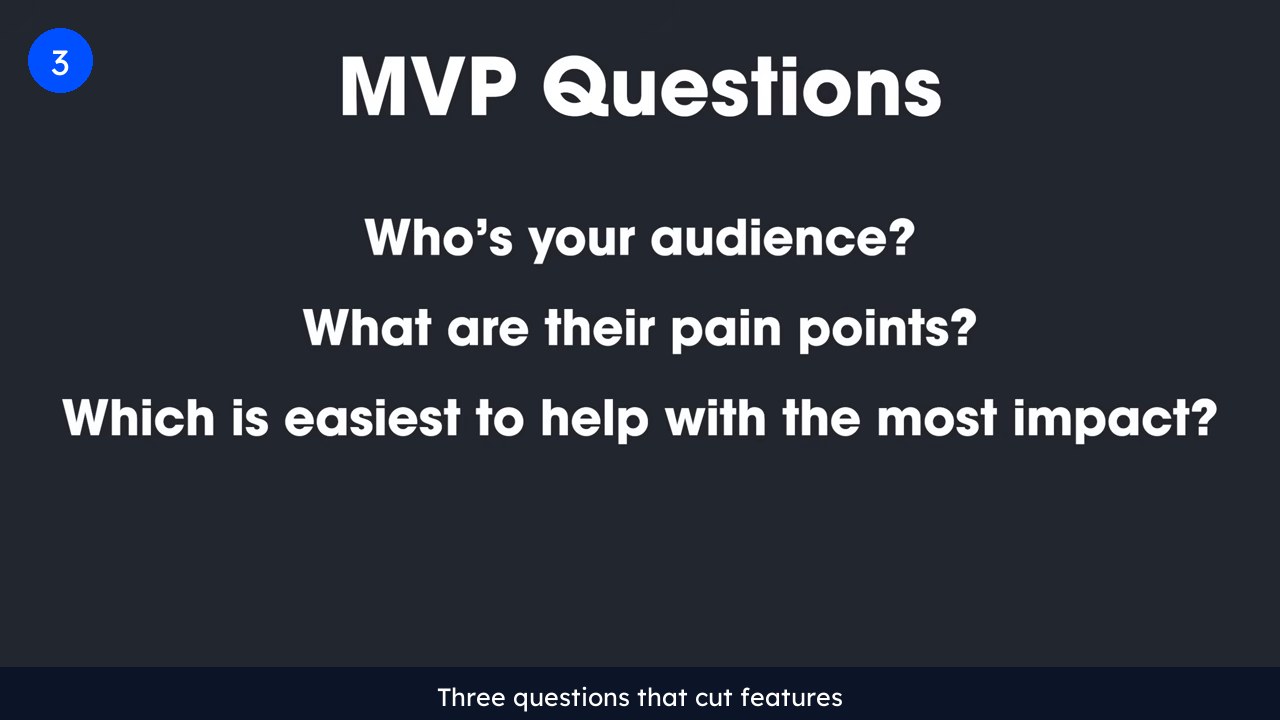
The scoping questions that do the most work are the plainest ones: who is this for, what specific pain does it remove, and what is the smallest version of the fix? Answer those three honestly and half the feature list usually falls away without an argument.
What to do with these numbers
Place your brief on the tier table, then multiply the hours you think it needs by the blended rate of a team you can realistically afford. If those two numbers are more than thirty percent apart, the brief is wrong, not the estimate.
Then collect two quotes at different rate points, one marketplace team and one agency, and compare hour budgets rather than totals. The team that shows you its hours line by line is the team that has actually thought about your app. When you are ready to price your build against real people, browse vetted full-stack developers and start with a short paid scoping sprint before you commit to the whole thing.
Frequently asked questions
How much does it cost to build an app with a single developer?
A solo developer on a US focused marketplace bills $60 to $150 an hour, so a 560 hour MVP lands between $34,000 and $84,000. It is not automatically cheaper than a small team, because one person still has to cover design, backend, mobile and QA, and the calendar stretches from twelve weeks to five or six months. Solo works best for a narrow, single platform product with a designer already lined up.
Is it cheaper to build for iOS or Android first?
The build cost is close to identical. Android testing usually costs slightly more because the device matrix is wider, while iOS review can be stricter. Pick the platform your audience is actually on rather than the cheaper one, since the real saving comes from shipping one platform instead of two, which is roughly 35 to 45 percent of the mobile line.
Why do app development quotes vary so much for the same brief?
Because the brief is usually not specific enough to price. Two vendors reading the same three page document will assume different numbers of user roles, different data models and different definitions of done. Ask every vendor for hours by line item rather than a single total, and the differences turn out to be scope assumptions, not padding.
How much does it cost to maintain an app after launch?
Plan on 15 to 25 percent of the original build cost per year. For a $42,000 MVP that is roughly $6,300 to $10,500 in engineering, plus $200 to $2,000 a month in hosting and $100 to $800 a month in third party services. Annual iOS and Android releases mean a maintenance budget of zero is really a rebuild budget scheduled for later.
Hire vetted talent