

Key takeaways
- →Expectations move with seniority: a junior's responsibility is becoming autonomous in the team, and it widens to the team, the organisation and company-wide from there. Say which band the role sits in.
- →Part of every team's way of working is unwritten and invisible to the team itself, so a remote hire should understand it before proposing changes to it.
- →Ten priorities is zero priorities. Apply Pareto, keep two, and answer the trade-off question: what happens if A slips and B ships?
- →Have the new developer ship one trivial change in the first two weeks. It surfaces the tools, the approvals, the notifications and every missing permission while a delay is free.
- →Few teams expect real output in the first weeks or months. Spend that window on depth and questions rather than tickets.
A developer joins on Monday. They are three time zones away, they have a laptop, a repository they have never seen, and a calendar with two introduction calls on it. Everything else they need in order to be useful — what the role is actually judged on, how this team talks to each other, which of the fourteen things in the backlog matter, how code reaches production — they are expected to work out by observation. In an office that mostly works, because observation is free. Remotely it is not: there is no hallway, no overheard standup, no one visibly rolling their eyes at the thing you were about to suggest.
So the new hire guesses, and guesses cost weeks. This guide is the other side of that problem: the six things a hiring manager or CTO can hand over deliberately in the first two weeks, in the order they stop being guesswork. Each step comes with the questions worth asking out loud, on either side of the call. At the end there is a short quiz to check the sequence stuck.
Step 1: state what the role is judged on, at this seniority, at this company
"Senior backend developer" is a job title, not an expectation. What the role is judged on shifts with seniority, and it shifts again between companies, which is why a senior hire from a 400-person org can look strangely passive in a ten-person one, and vice versa.
The rough shape is this. A junior developer's responsibility is themselves: the goal for the first stretch is becoming autonomous inside the team. As people grow, their responsibility and their influence widen — first to the team, then to the wider organisation, eventually company-wide. Somebody at the far end of that scale who is only shipping their own tickets is under-deployed, and somebody at the near end who is trying to redesign the org chart in week three is misreading the brief. Both failures come from the same place: nobody said which band the role sits in.
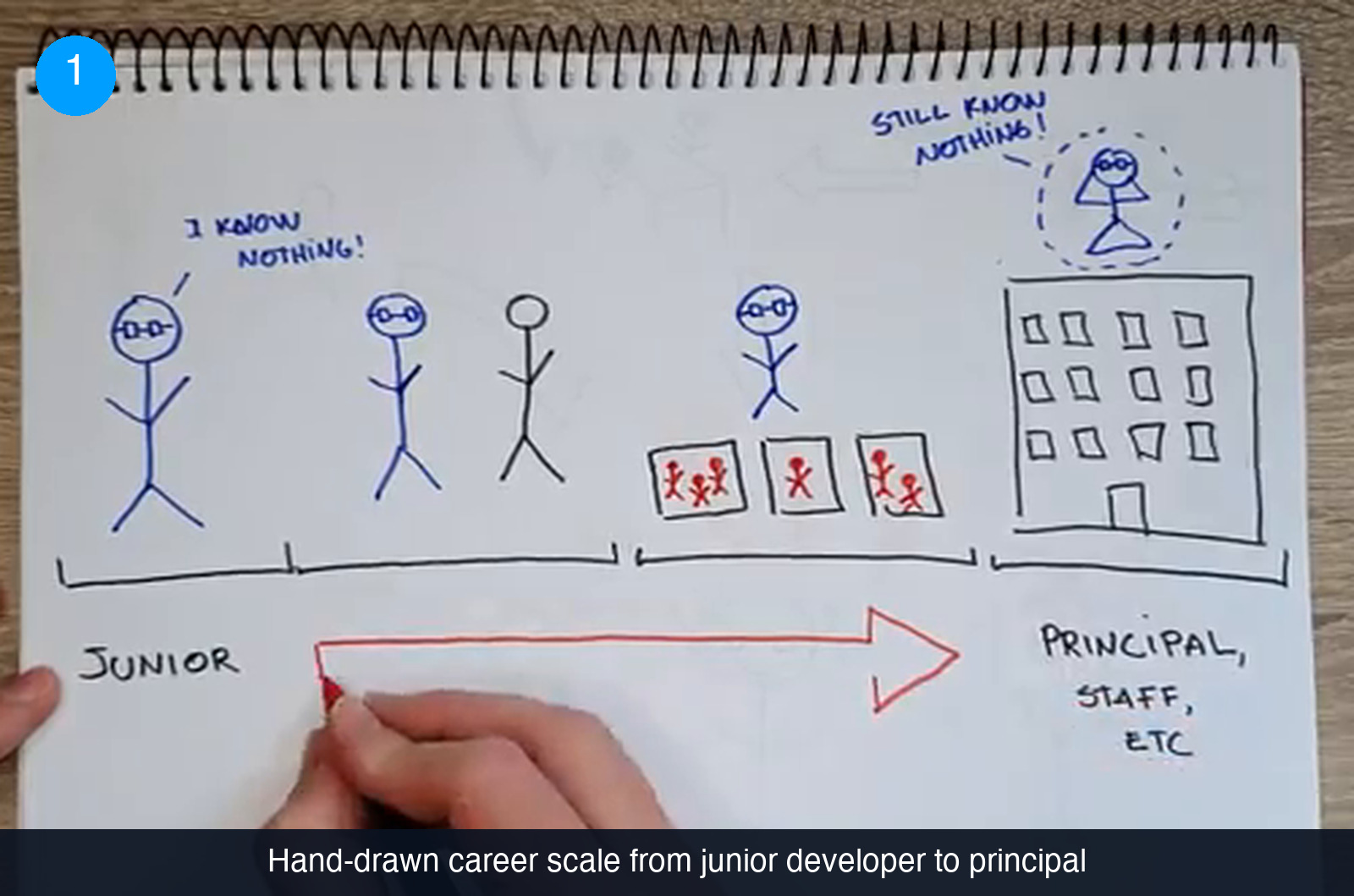
Most companies already have a written role description for the position. Send it before day one, and read it yourself first — if it has not been touched since the last hire, it is describing a job that no longer exists. Then close the gap in conversation. Three questions do most of the work, and they are worth putting in front of the new developer explicitly so they know they are allowed to ask them:
- What do you expect from me? The blunt version, and the one people are most reluctant to ask.
- What can I do to make your job easier? Turns an abstract role into a concrete list.
- What would you do if you were in my position? Surfaces the advice the other person would never volunteer unprompted.
Ask more than one person. The manager's answer carries the most weight, but the product person, the most senior developers on the team and occasionally a stakeholder outside it will each describe a different job, and the differences between those answers are exactly what the new hire needs to know. If the answers contradict each other, that is not a reason to hide them — it is the first real piece of context about how the organisation works. Writing the role down properly before you hire is the cheapest version of all of this; the same discipline that goes into a software project brief applies to the job you are handing someone.
Step 2: hand over the team's conventions, especially the unwritten ones
Every team has a way of working that nobody wrote down. Some of it is answerable on request: whether people prefer chat or a call, whether communication skews formal or informal, what the team agreements are, how pull requests get picked up. Ask, and you get a straight answer.
The rest is harder, because the team is often not conscious of it. Groups that have worked together for a while accumulate inertia and unexamined preferences — a topic that is quietly off-limits, a tool everyone complains about but nobody replaces, a person whose approval is unofficially required. None of that appears in an onboarding document, because writing it down would require noticing it first.
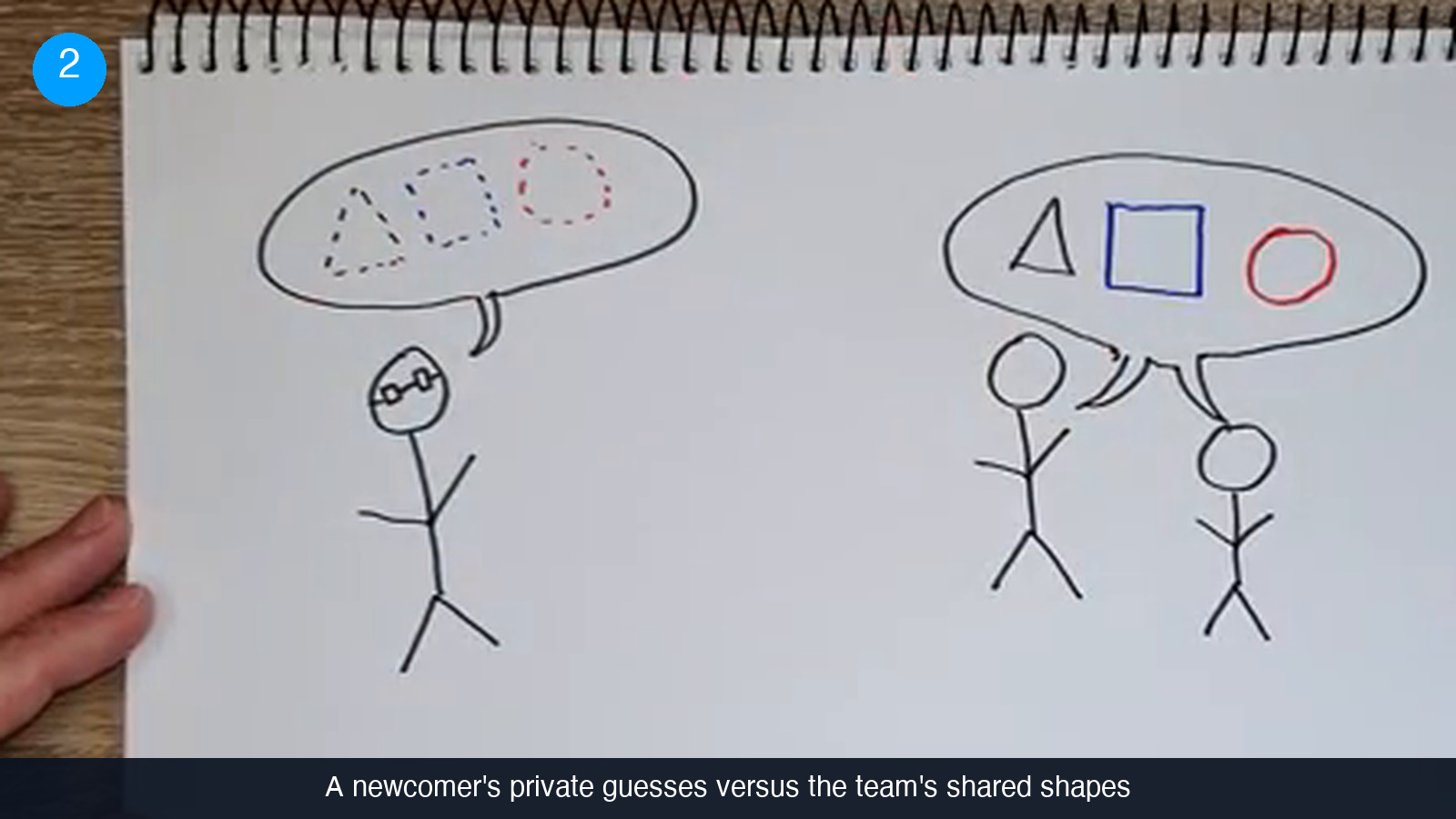
The practical consequence is an order of operations. A new developer should understand and adapt to the way the team currently works before proposing changes to it. This is not deference for its own sake — a suggestion made in week one lands as a criticism from a stranger, and the same suggestion in week six lands as an informed opinion from a colleague. As the person hiring, say this out loud, because otherwise a proactive hire will assume the opposite is what you wanted.
Questions that get at the unwritten layer, in increasing order of subtlety:
- What are the team agreements?
- How do you prefer to communicate?
- What is the best way to get input and feedback from you?
The third one is the useful one. It is phrased as a logistics question, so it is easy to answer honestly, and the answer tells you how someone actually wants to be approached.
Step 3: rank the priorities instead of listing them
Ask most teams for their priorities and you get a list. A list is not a ranking, and a new developer cannot act on one: when everything is the top priority, the first task that arrives carries no information about how much time it deserves.
So force the ranking before the first ticket, not after. Ask the team and the different roles around it what the highest priorities are, and settle the contradictions early. The payoff is immediate — when the new hire picks up their first piece of work, they already know where it sits and how much of their week it is worth. They should be learning the highest-priority parts of the system first, not the parts that happen to be at the top of the repository.
When the list is long, apply the Pareto principle out loud: pull the two items out of ten that carry most of the value, and be explicit that the other eight are not being worked on.

Three questions make the ranking real, and all three are more useful than "what are the priorities?":
- What can be dropped, and what cannot?
- What happens if feature A does not get delivered but feature B does? A trade-off question is much harder to dodge than a ranking question.
- Who should I meet outside of the team? Which leads directly into the next step.
Step 4: name the stakeholders and show where they sit
Priorities are people before they are tickets. Someone decided the roadmap, someone will be unhappy if the migration slips, someone has to sign off before anything touches billing. A developer in the office picks that map up by osmosis over a couple of months. A remote developer does not pick it up at all unless you draw it.
Identify the stakeholders who matter most, both for the new hire specifically and for the team as a whole. The influence matrix is a compact way to lay them out: one axis for how much influence a person has, one for how much interest they take in this particular work, and every name placed somewhere on the grid.
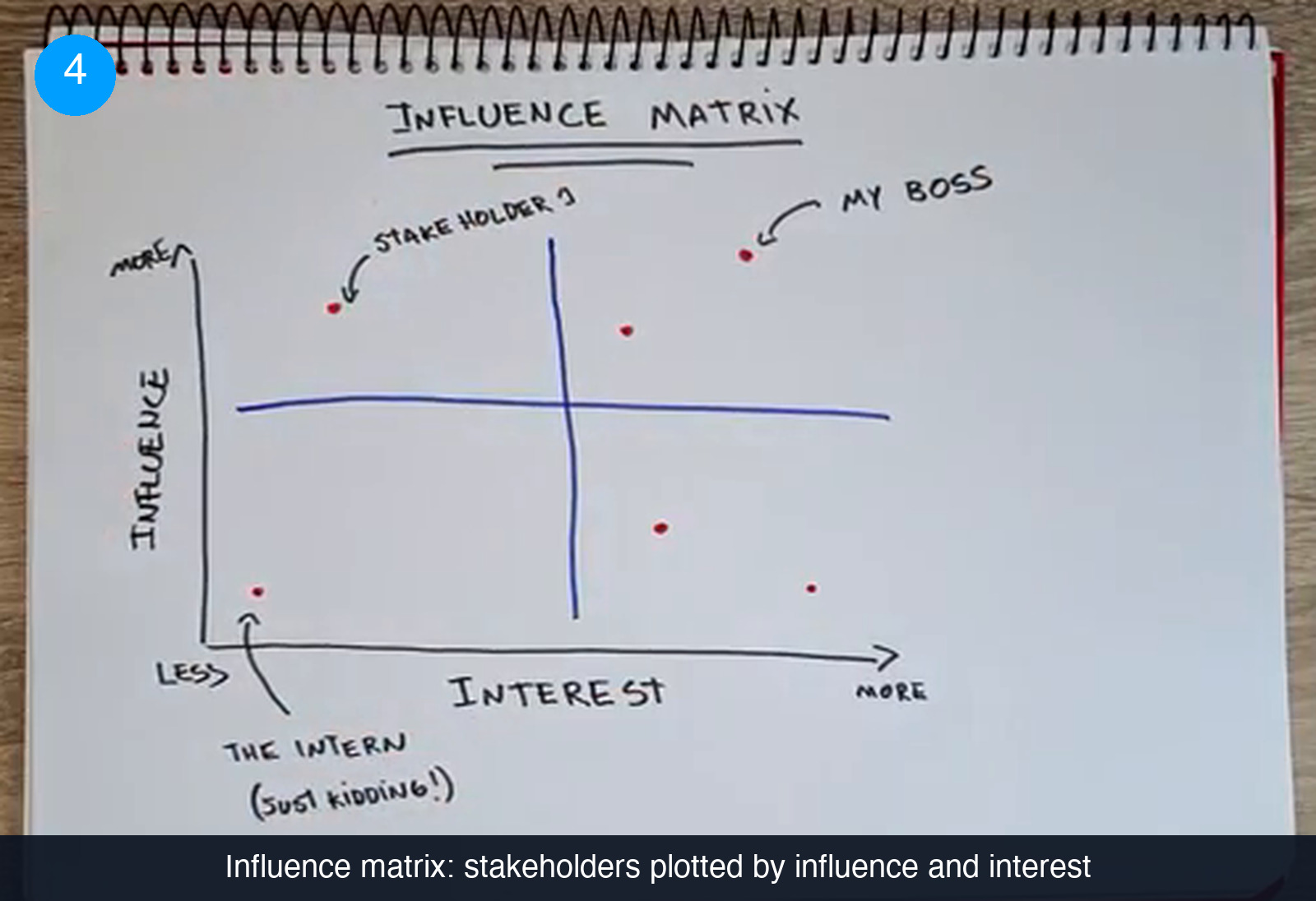
The grid is worth ten minutes of a manager's time because of what the quadrants imply. High influence and high interest is the person to keep genuinely informed. High influence and low interest is the person who can stop the project in one sentence and will not be watching until they do. Low influence and high interest is the person who will ask the most questions and should not be mistaken for the decision-maker. Getting those wrong in the first month is how a remote hire ends up briefing the wrong person for six weeks.
Step 5: get one trivial change into production in the first two weeks
Teams ship differently. Some deploy continuously; others release at the end of a sprint; most have a set of conventions around it, some written down and some not. The full shape of that process only becomes visible when someone walks through all of it.
So have the new developer ship something deliberately small in the first two weeks. A copy fix, a log line, a config default. The change itself is worthless; the walk through the pipeline is the point.
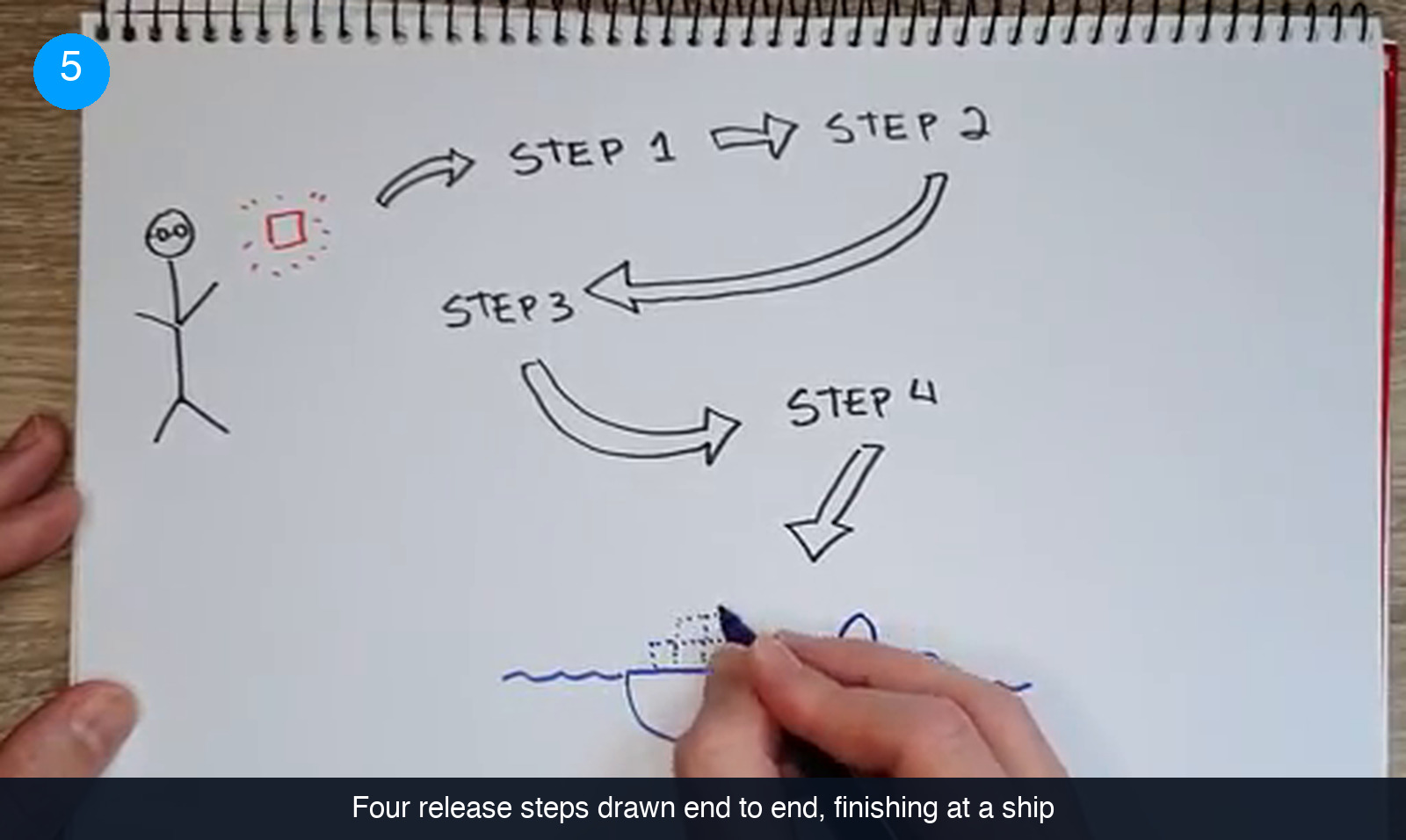
By the time that one-line change is live, the new hire has collected the things nobody thinks to document:
- which team agreements are actually enforced, as opposed to aspirational;
- the tools involved in writing code, committing it and releasing it;
- who needs to be notified, and at which point;
- every permission and access grant that was missing, discovered and approved on a change where the delay costs nothing.
That last one is the sleeper. Access requests are the classic way a remote first month evaporates: a credential that takes four days to issue is an annoyance in week one and a blocked release in week six. Do the discovery on the throwaway change. It also gives the team a first look at how this person handles review, which is worth doing properly on both sides — the mechanics are in our guide to reviewing a pull request.
Step 6: protect the learning window instead of filling it
Almost nobody expects a new hire to be productive in the first weeks, and often not in the first months. That expectation gap is an asset, and most onboarding plans spend it on busywork.
Understanding the important parts of a system in depth takes time that rushing does not remove; it only moves the cost later, into the gap discovered halfway through a migration. The first weeks are the cheapest time a developer will ever have for reading the codebase properly, finding the areas where their knowledge is thin, and asking for help without it being a status question.
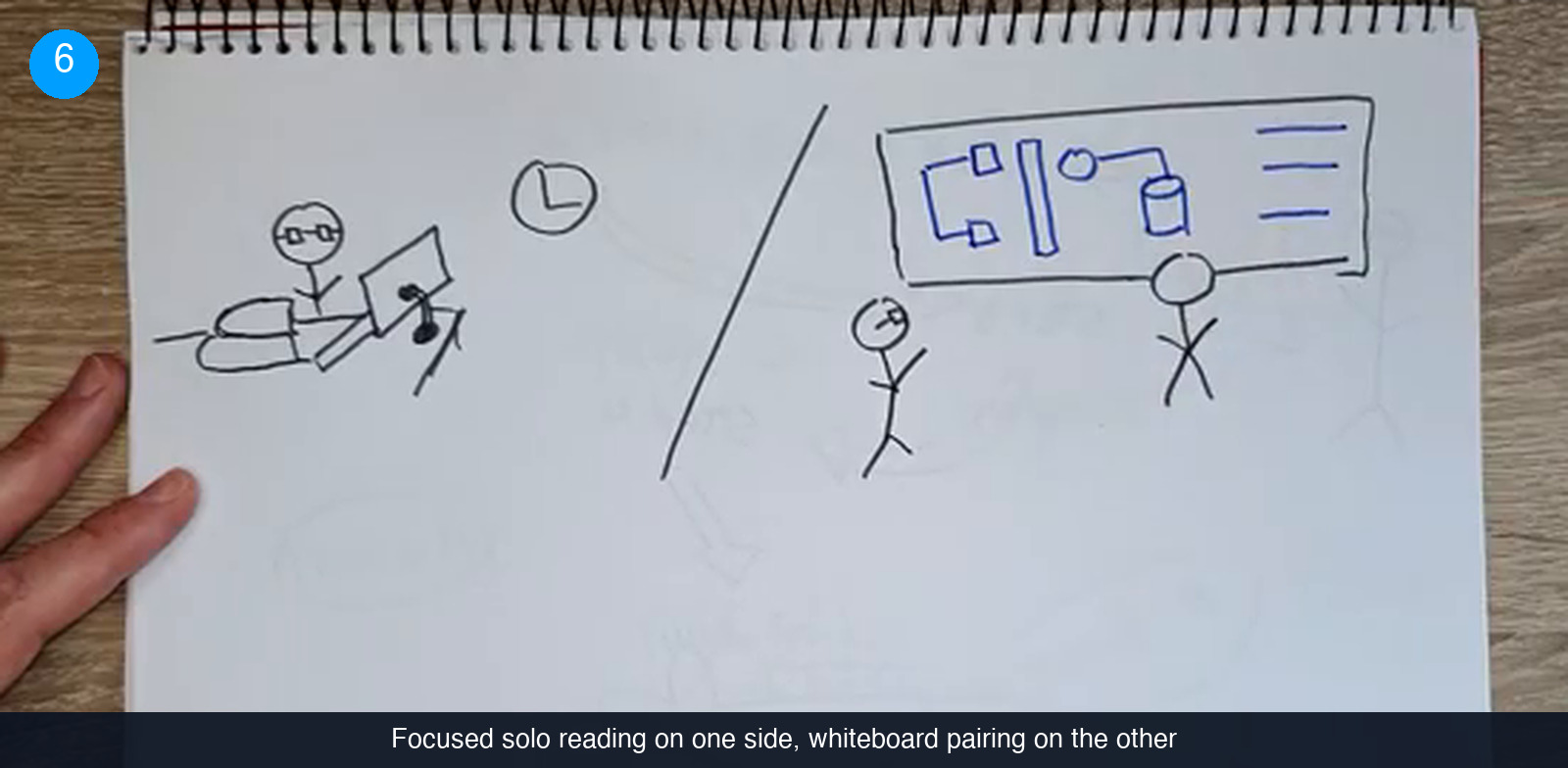
Two things make this concrete rather than a nice sentiment. Say explicitly that the first weeks are learning mode and that asking a lot of questions is the assignment, because otherwise a conscientious hire will ration their questions to look competent. And put fewer meetings on their calendar than on anyone else's, because focused time is the resource being protected and it is the first thing an eager team consumes.
Pressure does not change the arithmetic here. If the schedule is tight enough that a new developer has to skip understanding the system, the schedule was already broken before they arrived.
Where remote onboarding usually goes wrong
Five failure modes account for most of the damage, and none of them is about the developer's ability.
- One onboarding plan for every seniority. A junior needs a path to autonomy; a principal needs the org chart, the constraints and permission to touch things. The same checklist serves neither.
- Expecting the unwritten rules to be inferred. They were invisible to the team long before they were invisible to the new hire, and remotely there is nothing to infer them from.
- Handing over a list and calling it priorities. Ten priorities is zero priorities. Cross eight out.
- Saving the first deploy for a real feature. Then the release process, the missing permissions and the unwritten conventions all get discovered at once, on the change that has a deadline.
- Buying the low expectations and then ignoring them. Everyone agrees the first month is for learning, and then the first month gets filled with tickets anyway.
There is a sixth, quieter one: hiring someone for their experience and then leaving no room for it. A new developer arrives with solutions to problems this team has been living with, and some of them are quick wins that only look obvious from the outside. Ask what they have seen elsewhere, take the articles and the fun facts and the alternative approaches, and let them challenge current practice once they have earned the context to do it well. That exchange is most of what makes the team glad they hired.
Check that the onboarding sequence stuck
6 questions on the brief you just read. Pick one answer per question.
1. What mainly changes about a developer's expected responsibility as they become more senior?
2. Why should a new developer adapt to the team's existing way of working before proposing changes?
3. The backlog has ten items all described as top priority. What does the Pareto approach suggest?
4. What are the two axes of an influence matrix?
5. What is the point of shipping a trivial change in the first two weeks?
6. How should the first weeks be used, given that few teams expect productivity that early?
Score: 0 / 6
A first month that produces context, not just tickets
The sequence is short enough to run for every hire. Say what the role is judged on at this seniority and get more than one answer. Hand over the conventions, including the ones the team stopped noticing. Rank the priorities down to two and name the trade-offs. Draw the stakeholders on the influence grid. Ship something trivial in week one so the release process and the missing permissions are already solved. Then protect the learning window instead of filling it, and ask what the new person brought with them.
None of it requires tooling, and all of it collapses the guessing that makes a remote first month expensive. If the team you are onboarding into does not exist yet, that is the harder half of the problem: we match US companies with vetted remote developers and run the introductions — see how it works.
Frequently asked questions
How long should onboarding a remote developer take?
Longer than most plans assume. Few teams genuinely expect a new person to be productive in the first weeks, and on a large codebase that stretches into months. The useful question is not how fast the ramp is but what the ramp is spent on: understanding the highest-priority parts of the system in depth, rather than rushing through them and finding the gaps later, halfway through work that has a deadline.
What should a remote developer ship first?
Something small enough that it does not matter if it takes a week. A copy change, a log line, a config default. The value is not in the change but in walking the entire path to production once: the coding and release tooling, the conventions the team actually enforces, who gets notified at which point, and every access grant that turns out to be missing. Discovering all of that on a throwaway change costs nothing; discovering it on a deadline costs the deadline.
How do you communicate team culture to someone you will never meet in person?
Split it in two. The answerable part — team agreements, chat versus calls, how formal the tone is, how feedback is given — can simply be written down and sent, and most of it never has been. The unwritten part is harder because the team is often unaware of it, so the substitute for osmosis is invitation: tell the new hire that asking a lot of questions is the assignment, and ask each person on the team what the best way is to get input and feedback from them.
Should a new hire suggest improvements straight away?
Not before they understand the current approach. The same suggestion reads as a criticism from a stranger in week one and as an informed opinion from a colleague in week six. That said, the experience a new developer brings is part of what you hired, so the window should not stay shut: ask what they have seen work elsewhere, take the quick wins that are only obvious from the outside, and let them challenge current practice once they have the context to do it well.
Hire vetted talent